What “ingredients” should be added to good concrete?

Four hours after the concrete pouring of the main side wall of Wenyang Road Station, Cao Wenwu had already stood next to the initially set side wall with a thermometer.

The numbers on the screen made him furrow his brow: the temperature of the C45P8 concrete core was 52.

9 ℃, while the surface was only 31.

8 ℃.

The temperature difference of 25 ℃ was like an invisible crack, growing bigger and bigger in his heart.

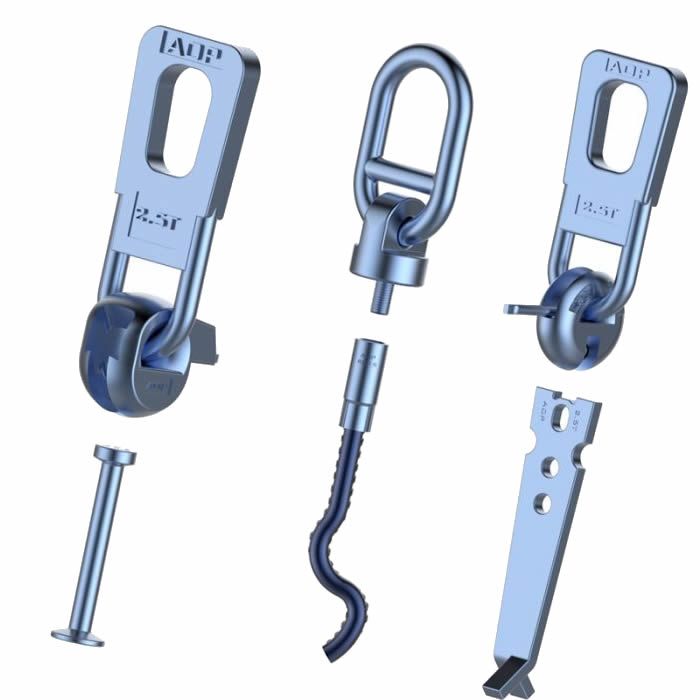
Cast In Plate

As the team leader of the concrete team in Section 06 of Qingdao Metro Line 15, this is not the first time we have encountered a similar situation this month.

Looking at the temperature measurement data that exceeded the standard, it was as if he could see the slow development of cracks inside the concrete, which was another challenge he and his team encountered in the trial of decorative concrete.

.

Colorful Concrete: Creating Multi Landscape Ground Art

In the ground paving of public spaces such as amusement parks, squares, and parks, colored concrete is becoming the preferred material for modern landscape design due to its excellent durability, aesthetic expression, and functionality.

Crown Foot Anchor

This innovative paving technology not only perfectly integrates modern aesthetics and natural charm, but also achieves effective distribution and guidance of pedestrian flow through scientific design, meeting the needs of high passenger flow scenarios.

.

75% of concrete quality problems can be solved by using “smart commercial concrete”!

The site of Lei Zhi Zao in the United Arab Emirates (Dubai) has been officially completed and put into use.

This project will serve multiple major infrastructure projects in the Middle East, providing local users with a digital management solution for the entire lifecycle of concrete based on full support from Apple, Android, and HarmonyOS ecosystems.

Coil Loop Insert

.

Analysis of Factors Affecting Concrete Strength Testing by Rebound Method and Study on Correction Methods

The rebound method for testing concrete strength is a widely used non-destructive testing technique in construction engineering.

Concrete Plate Anchors

The basic principle is based on the correlation between the surface hardness of concrete and its compressive strength, and the actual strength of concrete is calculated by measuring the rebound value after the rebound instrument impacts the concrete surface.

During the testing process, the spring hammer head of the rebound instrument is used to impact the concrete surface with a certain amount of kinetic energy, generating rebound force through the compression and release of the spring, and recording the rebound value.

The magnitude of rebound value reflects the hardness of the concrete surface, and indirectly infers its internal strength characteristics.

.

Research Report on Inspection Requirements and Nonconforming Treatment of Building Materials for Main Concrete Subdivision

Faced with a multitude of building raw materials, semi-finished products, and components, on-site managers often have questions: which materials need to be inspected? How to scientifically divide inspection batches? What procedures should be followed when the test results are unqualified? Previously, we have summarized the important materials and components commonly used in foundation and foundation sub projects.

Today, we will share with you the important materials and components commonly used in the main concrete sub project, including grouting materials, steel sleeve connections, precast components, partition boards, cement, steel bars, steel bar connections, sand and gravel, wall materials, and pre mixed mortar.

Magnetic Thread Disc

.

Hydraulic Reinforced Concrete Structures | Key Summary of the Whole Book (6) Chapter 5 Calculation of Bearing Capacity of Reinforced

For the convenience of template production, compression members generally adopt square or rectangular cross-sections.

When using a rectangular section for eccentrically compressed components, the long side of the section is arranged in the direction of the bending moment, and the ratio of the long side to the short side is generally 1.

Steel Chamfer

5 to 2.

5.

.