Key project rectification: Concrete strength not meeting the standard!

China Metallurgical Group Corporation (MCC) (60161801618.

HK) signed a major engineering contract worth up to 3.

53 billion yuan in the first half of 2020.

The full name of the project is “Zhejiang University Hangzhou International Science and Technology Innovation Center Project Phase I EPC Project”, which was won by MCC Communications Construction Group Co.

, Ltd.

(referred to as “MCC Communications”), a subsidiary of MCC.

Recently, it was discovered during the acceptance stage that there were quality issues with the concrete strength of structural components that did not meet the standard.

They were required to rectify within a specified period of time.

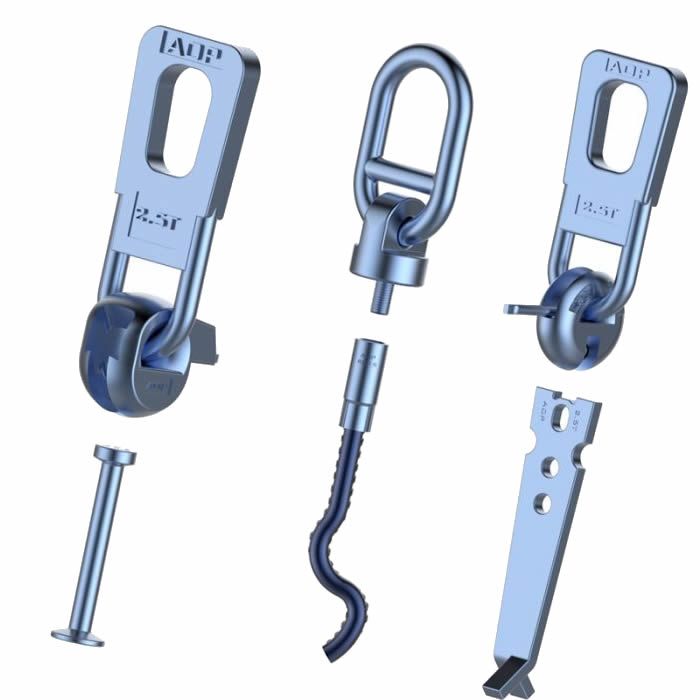
Concrete Lifting Clutch

If the rectification fails, the project will not be accepted.

.

Study on the Influence of Water Demand Ratio of Fly Ash on Concrete Performance

This experiment focuses on the water demand ratio index of fly ash, and conducts concrete performance tests on six different water demand ratios of fly ash collected from the Fujian region.

The influence of fly ash water demand on various properties of concrete is studied, and the fineness, loss on ignition and other performance tests of fly ash are conducted to explore the factors affecting the water demand of fly ash.

Measures for controlling and improving the water demand of fly ash are proposed, providing reference for the quality control of concrete production.

Rebar Bolsters

.

The difference between gravel and crushed stone concrete

Both gravel and pebbles can be used as coarse aggregates to mix concrete, and their formation processes and properties are different.

Gravel is usually artificially crushed, with rough and angular interfaces, a large specific surface area, and good bonding performance with cement.

Pebbles are smooth surfaces formed by years of erosion and collision under the action of river water.

Fixing Socket

They are mostly circular or elliptical particles with poor bonding properties to cement.

.

Analysis of Quality Characteristics and Influencing Factors of Mechanized Aggregates for High Performance Concrete

Aggregates are granular loose materials such as rock particles that serve as a skeleton, filling, and stabilizing volume in concrete.

They are also commonly referred to as aggregates or sand and gravel materials.

Aggregates account for about 70% to 80% of the volume of concrete, which is a key factor affecting the quality of concrete and even largely determines whether qualified concrete can be produced stably.

Concrete Lifting Clutch

Aggregates can be divided into natural aggregates and machine-made aggregates according to their sources, and into coarse aggregates (stones) and fine aggregates (sands) according to their particle size.

For a long time, the vast majority of concrete production in China has mainly used natural aggregates.

However, with the gradual reduction of natural aggregate resources and increasing environmental protection efforts, mechanism aggregates have replaced natural aggregates as the main source of aggregates in the construction market, accounting for about 70% of construction aggregates.

.

What are the connotations and influencing factors of concrete workability

During the construction process, in order to facilitate the transportation, pumping, pouring, vibration and other construction processes of concrete, it is required that the concrete must have good workability, and there should be no layering, segregation or bleeding of the concrete.

Pfeifer VS Box

The workability of concrete is a crucial step before structural formation, hardening, and strength generation, as well as a guarantee for the later strength and durability of concrete structures.

The workability of concrete is a comprehensive indicator, which includes fluidity, cohesiveness, and water retention.

.

Water reducing agent of concrete admixture: the core force in reshaping the performance of concrete

In the modern concrete engineering system, admixtures have become the “fourth component” alongside cement, aggregates, and water, and water reducers, as the most widely used and technically valuable category of admixtures, are also known as the “blood of concrete”.

It fundamentally solves the pain point of traditional concrete’s difficulty in balancing fluidity and strength by changing the interface interaction and moisture distribution inside the concrete.

Coil Loop Insert

It not only promotes the development of high-performance concrete, but also plays an irreplaceable role in improving engineering quality, cost control, and green construction.

This article will systematically analyze the importance of water reducing agents from three dimensions: optimizing concrete performance, engineering practical value, and promoting industry development, revealing why they have become an indispensable key material in modern concrete engineering.

.

How do concrete temperature cracks occur? Analysis from Causes to Mechanisms

Temperature cracks are one of the most common quality issues in concrete engineering.

Steel Chamfer

Whether it is large volume concrete (such as bridge piers, high-rise building foundations) or ordinary components (such as floor slabs, walls), cracks may occur due to temperature changes.

These cracks not only affect the appearance of concrete, but also reduce the impermeability and durability of the structure, and in severe cases, even threaten engineering safety.

To effectively prevent and control temperature cracks, it is necessary to first clarify the core mechanism of their occurrence – the stress caused by temperature changes inside the concrete exceeding the material’s own tensile strength.

This article will start from the source of temperature changes in concrete, analyze the process of temperature cracks in stages and types, and reveal the influence of different factors on crack formation.

.

How to determine whether to add less or more admixtures based on the state of concrete?

In concrete engineering construction, the dosage of admixtures directly affects the performance and engineering quality of concrete.

Excessive or insufficient dosage of admixtures can lead to a series of problems in concrete, ranging from affecting construction efficiency to posing safety hazards.

Therefore, accurately determining whether the dosage of admixtures is reasonable based on the state of concrete is a core skill that engineering and construction personnel must master.

This article will systematically review the methods for determining the amount and quantity of admixtures from the dimensions of the appearance characteristics, workability, mechanical properties, and special phenomena of concrete, providing accurate references for practical construction.

Halfen Channel

.

Who will be in charge of the construction quality issues of Cangzhou Yishang concrete mixed with steel slag?

Recently, Sentian Construction Engineering Co.

, Ltd.

in Bohai New Area, Cangzhou, Hebei Province reported that steel slag was added to the concrete supplied by Quantongshang Concrete Co.

, Ltd.

, causing concrete bulging and falling off on most floors of the project’s comprehensive building (1st to 7th floors), workshop office building, power distribution room 1, power distribution room 2, etc.

Lifting Anchor

, which has serious engineering quality problems and safety hazards, affecting the normal use of owners.

The construction houses have serious quality problems, including wall cracking, ground sanding, and insufficient structural strength.

.