The influence of cement dosage on the carbonation depth of concrete

In the design of concrete mix proportions, the amount of cement used is the core parameter that directly determines the total amount of cementitious materials, the composition of hydration products, and the compactness of the microstructure of the concrete, thereby profoundly affecting the carbonation depth from three dimensions: “alkali reserve supply”, “pore structure optimization”, and “interface transition zone improvement”.

Shuttering Magnet

Scientific clarification of the intrinsic relationship between the two is of crucial guiding significance for improving concrete carbonation resistance and extending structural durability through mix proportion optimization.

.

Important parameter of concrete mix proportion – water cement ratio

The water cement ratio, water consumption, and sand ratio together constitute important parameters of concrete mix proportion.

Once these three parameters are determined, the concrete mix proportion is also basically determined.

The water cement ratio refers to the ratio of the amount of water used in concrete to the amount of cementitious material used.

The water cement ratio is an important parameter in concrete mix proportions, and many properties of concrete are directly related to it, such as workability, strength, durability, etc.

Therefore, understanding and controlling the water cement ratio is crucial for controlling the quality of concrete.

Rebar Wheel Spacers

.

Calcium silicon battle, concrete hydration reaction revealed!

Hello everyone, my name is Tyler Lai, welcome back to my YouTube channel.

This issue is about hydration reactions.

Hydration is one of the most mysterious, easily misunderstood, yet very important stages in the life cycle of concrete.

It is the birth of concrete, exciting yet somewhat terrifying, truly a magical thing.

I will integrate the opinions of multiple experts and attempt to provide some data to showcase people’s research results.

At the same time, I will also share the latest popular data collected by our research group, hoping that these can help everyone better understand hydration reactions.

We will spend a lot of time analyzing this chart, zooming in and explaining its various parts.

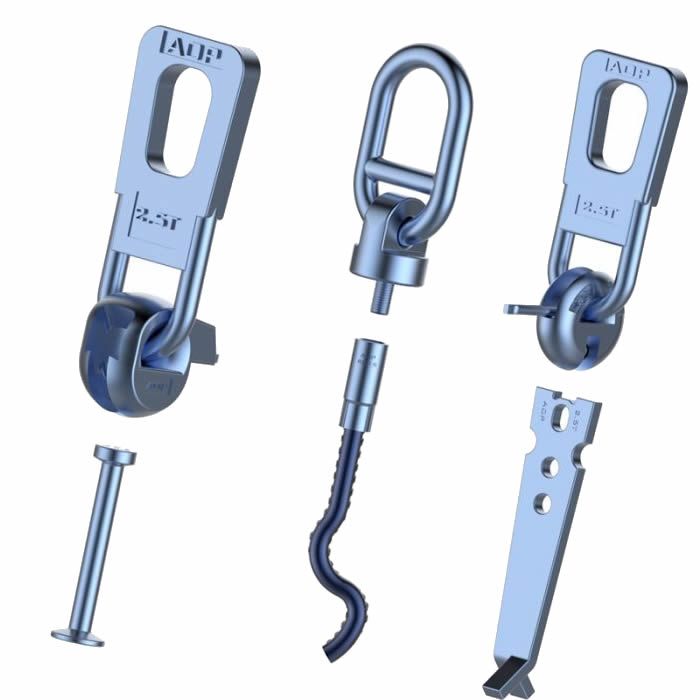
Concrete Lifting Clutch

.

Handling of issues such as honeycomb, rough surface, exposed reinforcement, cracks, and missing corners

During the structural construction process, the project department often discovers varying degrees of quality problems on the construction site, including slag inclusion in construction joints (floor slabs), exposed steel bars, concrete honeycombs, rough surfaces, missing edges and corners, floor cracks, and uneven door and window openings.

Steel Chamfer

.

Winter low temperature, key points for hydraulic concrete construction

Due to time constraints, many projects need to be constructed in winter, and the construction technology of winter hydraulic concrete is very important.

Winter construction should pay attention to issues such as pouring, transportation, and curing of concrete.

Concrete Plate Anchors

This article proposes preventive measures for common quality problems in concrete construction during winter.

.

The common quality problem of “salt precipitation” in concrete engineering

The phenomenon of “salt precipitation” refers to the migration of soluble salts and alkali substances from the interior of concrete to the surface with water after hardening.

After the water evaporates, white flocculent or powdery residues are left on the surface.

Lifting Anchor

These residues are mainly calcium carbonate (CaCO3), and may also be sodium sulfate, potassium salt, etc.

.

Pre mixed concrete green building material certification: 2025 enterprise application practical guide (from policy to testing

In the current era where the “dual carbon” goal is driving the deep transformation of the construction industry, ready mixed concrete, as the “cornerstone material” of engineering construction (accounting for more than 60% of building consumables), has long bid farewell to the era of “only focusing on strength, without considering environmental protection”.

This article compares the latest policy requirements and breaks down the key points of the entire process of green certification for ready mixed concrete, helping enterprises avoid application errors and obtain certificates efficiently.

Halfen Channel

.

How to design the concrete mix proportion for highway bridges and culverts

1.

The concrete mix proportion should be determined based on the design reference period and environmental conditions of the structure, according to the requirements of raw material quality, design strength grade, durability, construction technology, etc.

, referring to the “Code for Design of Ordinary Concrete Mix Proportion” (JGJ 55-2011) and the “Technical Specification for Construction of Highway Bridges and Culverts” (JTG/T 3650-2020), through calculation, trial mixing, adjustment and other steps.

The crack resistance performance of key component concrete mix proportions should be optimized and verified by trial pouring.

When the design has higher requirements for the durability index of concrete, its mix proportion should be determined separately through research.

When using statistical data of the same type of concrete to calculate and determine the standard deviation of concrete, for concrete of C30 and below, if the calculated strength standard deviation is less than 3.

Steel Chamfer

0 MPa, the standard deviation used for calculating the formulated strength should be taken as 3.

0 MPa.

When there is no statistical data to calculate the standard deviation of concrete strength, the following table can be used for selection.

.

Policy Interpretation | Understanding the “Management Measures for Pre mixed Concrete Production Enterprises in Hohhot City (Trial)” with

The drafting of the “Measures” is mainly based on the “Construction Law of the People’s Republic of China”, “Regulations on Qualification Management of Construction Enterprises” (Order No.

22 of the Ministry of Construction), “Regulations on Energy Conservation and Green Building Development of Civil Buildings in Inner Mongolia Autonomous Region”, “Regulations on Quality Management of Construction Projects in Hohhot City”, “Measures for Promoting the Development of New Wall Materials in Inner Mongolia Autonomous Region” and “Qualification Standards for Construction Enterprises”.

Precast Round Ferrule

Combined with the actual situation of our city, targeted improvements and enhancements are made to the management of ready mixed concrete production enterprises.

.