Study on the Influence of Stone Powder Content in Mechanized Sand on Concrete Quality

With the continuous development of highway and railway engineering construction in China, qualified natural sand that can be mined is becoming increasingly scarce, and the use of machine-made sand has become an inevitable trend in the development of engineering construction.

As the most basic raw material for engineering construction, machine-made sand is more in line with national low-carbon and environmental protection requirements and has low cost compared to river sand.

It has a wide application prospect.

However, the content of machine-made sand stone powder is significantly higher than that of river sand.

The stone powder content has a great impact on the performance of concrete mixtures and the quality of engineering entities.

Controlling the stone powder content within a certain range plays a filling role in concrete and is conducive to concrete quality control.

However, if the stone powder content exceeds the limit, it will have a counterproductive effect.

Plastic Nail Plate

Therefore, when using machine-made sand to mix concrete, it is very important to find the optimal stone powder content for on-site concrete quality and cost control methods.

.

The influence of aggregate crushing value on concrete

The size of the crushing value index (coarse aggregate, fine aggregate) directly reflects the mechanical properties (strength, crushing resistance) of the aggregate, which has a significant impact on the strength, workability, durability, and construction performance of concrete.

Moreover, the sensitivity of crushing value varies among different strength grades and types of concrete.

Shuttering Magnet

.

The influence of sand quality on concrete cannot be ignored

Zone I (coarse sand) sand is suitable for high-strength concrete (≥ C50) or large volume concrete (reducing cement dosage and hydration heat).

Zone II (medium sand) has the widest applicability and can be used for C30~C60 concrete and pumped concrete (with easy control of fluidity).

Lifting Socket

Zone III (fine sand), suitable for low strength concrete (≤ C25) or scenarios requiring high water retention (such as thin-layer pouring), but the dosage needs to be controlled to avoid deterioration of workability due to excessive specific surface area.

.

Discussion on the main factors and control measures affecting the workability of concrete mixtures

Workability refers to the ease of construction operations (mixing, transportation, pouring, compacting) of concrete mixtures and the ability to achieve compact, uniform quality, no segregation, and no bleeding.

Elephant Foot Ferrule

The workability generally includes three aspects: fluidity, cohesiveness, and water retention.

.

Key project rectification: Concrete strength not meeting the standard!

China Metallurgical Group Corporation (MCC) (60161801618.

HK) signed a major engineering contract worth up to 3.

53 billion yuan in the first half of 2020.

The full name of the project is “Zhejiang University Hangzhou International Science and Technology Innovation Center Project Phase I EPC Project”, which was won by MCC Communications Construction Group Co.

, Ltd.

(referred to as “MCC Communications”), a subsidiary of MCC.

Recently, it was discovered during the acceptance stage that there were quality issues with the concrete strength of structural components that did not meet the standard.

They were required to rectify within a specified period of time.

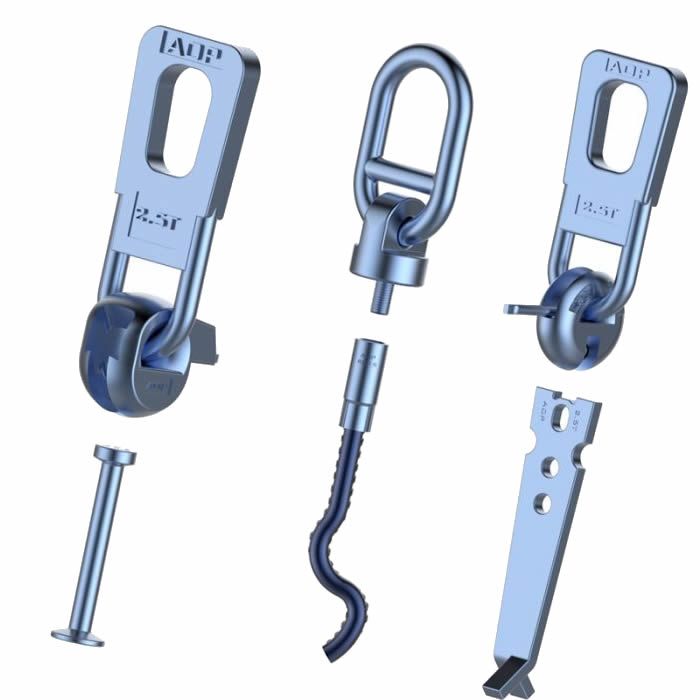
Concrete Lifting Clutch

If the rectification fails, the project will not be accepted.

.

Study on the Influence of Water Demand Ratio of Fly Ash on Concrete Performance

This experiment focuses on the water demand ratio index of fly ash, and conducts concrete performance tests on six different water demand ratios of fly ash collected from the Fujian region.

The influence of fly ash water demand on various properties of concrete is studied, and the fineness, loss on ignition and other performance tests of fly ash are conducted to explore the factors affecting the water demand of fly ash.

Measures for controlling and improving the water demand of fly ash are proposed, providing reference for the quality control of concrete production.

Rebar Bolsters

.

The difference between gravel and crushed stone concrete

Both gravel and pebbles can be used as coarse aggregates to mix concrete, and their formation processes and properties are different.

Gravel is usually artificially crushed, with rough and angular interfaces, a large specific surface area, and good bonding performance with cement.

Pebbles are smooth surfaces formed by years of erosion and collision under the action of river water.

Fixing Socket

They are mostly circular or elliptical particles with poor bonding properties to cement.

.

Analysis of Quality Characteristics and Influencing Factors of Mechanized Aggregates for High Performance Concrete

Aggregates are granular loose materials such as rock particles that serve as a skeleton, filling, and stabilizing volume in concrete.

They are also commonly referred to as aggregates or sand and gravel materials.

Aggregates account for about 70% to 80% of the volume of concrete, which is a key factor affecting the quality of concrete and even largely determines whether qualified concrete can be produced stably.

Concrete Lifting Clutch

Aggregates can be divided into natural aggregates and machine-made aggregates according to their sources, and into coarse aggregates (stones) and fine aggregates (sands) according to their particle size.

For a long time, the vast majority of concrete production in China has mainly used natural aggregates.

However, with the gradual reduction of natural aggregate resources and increasing environmental protection efforts, mechanism aggregates have replaced natural aggregates as the main source of aggregates in the construction market, accounting for about 70% of construction aggregates.

.

What are the connotations and influencing factors of concrete workability

During the construction process, in order to facilitate the transportation, pumping, pouring, vibration and other construction processes of concrete, it is required that the concrete must have good workability, and there should be no layering, segregation or bleeding of the concrete.

Pfeifer VS Box

The workability of concrete is a crucial step before structural formation, hardening, and strength generation, as well as a guarantee for the later strength and durability of concrete structures.

The workability of concrete is a comprehensive indicator, which includes fluidity, cohesiveness, and water retention.

.