Analysis of Factors Affecting Concrete Strength Testing by Rebound Method and Study on Correction Methods

The rebound method for testing concrete strength is a widely used non-destructive testing technique in construction engineering.

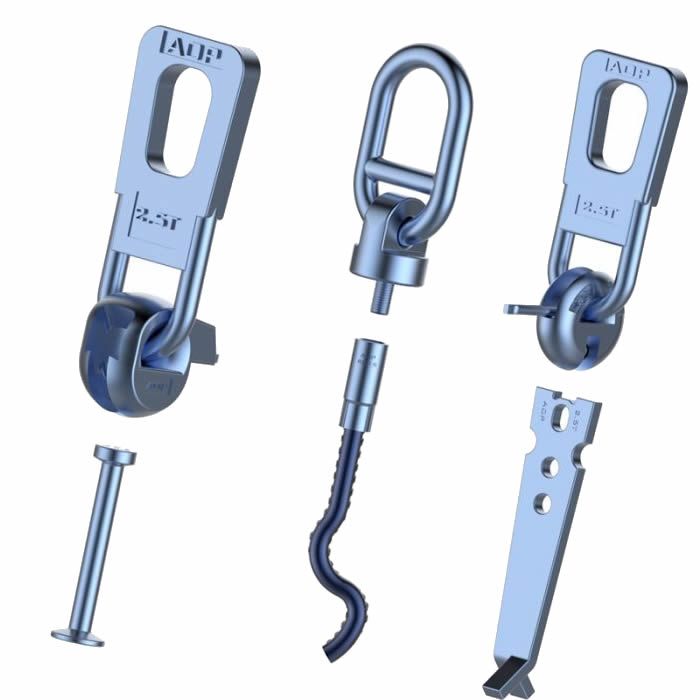
Concrete Plate Anchors

The basic principle is based on the correlation between the surface hardness of concrete and its compressive strength, and the actual strength of concrete is calculated by measuring the rebound value after the rebound instrument impacts the concrete surface.

During the testing process, the spring hammer head of the rebound instrument is used to impact the concrete surface with a certain amount of kinetic energy, generating rebound force through the compression and release of the spring, and recording the rebound value.

The magnitude of rebound value reflects the hardness of the concrete surface, and indirectly infers its internal strength characteristics.

.

Research Report on Inspection Requirements and Nonconforming Treatment of Building Materials for Main Concrete Subdivision

Faced with a multitude of building raw materials, semi-finished products, and components, on-site managers often have questions: which materials need to be inspected? How to scientifically divide inspection batches? What procedures should be followed when the test results are unqualified? Previously, we have summarized the important materials and components commonly used in foundation and foundation sub projects.

Today, we will share with you the important materials and components commonly used in the main concrete sub project, including grouting materials, steel sleeve connections, precast components, partition boards, cement, steel bars, steel bar connections, sand and gravel, wall materials, and pre mixed mortar.

Magnetic Thread Disc

.

Hydraulic Reinforced Concrete Structures | Key Summary of the Whole Book (6) Chapter 5 Calculation of Bearing Capacity of Reinforced

For the convenience of template production, compression members generally adopt square or rectangular cross-sections.

When using a rectangular section for eccentrically compressed components, the long side of the section is arranged in the direction of the bending moment, and the ratio of the long side to the short side is generally 1.

Steel Chamfer

5 to 2.

5.

.

The Effect of Grading Efficiency of Cementitious Materials on Concrete Strength

In the past decade, experts and scholars have clearly pointed out that the strength and durability of concrete mainly depend on the characteristics of the cementitious matrix and the bonding properties between the cementitious matrix and aggregates.

Elephant Foot Ferrule

The bonding properties between the matrix of the cementitious system and the aggregate depend on the characteristics of the matrix of the cementitious system.

Therefore, this article verifies whether the optimal stacking state of various materials in the cementitious system has a beneficial effect on the formation of concrete structures, and ultimately aims to broaden the design ideas of mix proportions and improve the economic benefits of concrete production enterprises.

.

The influence of mechanism sand mixed with stone powder on the performance of C50 bridge concrete

Concrete, as the most widely used building material, occupies a core position in China’s infrastructure field.

In 2021, China’s concrete production reached a peak of 3.

3 billion cubic meters, of which fine aggregates accounted for over one-third.

However, as a traditional fine aggregate, natural river sand is a non renewable resource, and its mining not only incurs high costs, but also faces the problem of increasingly depleted resources.

Erection Anchor

In this context, mechanism sand has become an ideal alternative material due to its abundant resources, simple preparation process, and economic advantages.

However, its inherent problems such as strong particle angularity, poor gradation continuity, and high stone powder content limit its application in high-grade concrete structures such as bridges.

.

Laboratory under the “involution” of the concrete industry

Nowadays, the concept of “involution” has evolved into a synonym for vicious competition and internal friction in development, and is showing an increasingly fierce trend in the concrete production industry.

Concrete production enterprises are deeply trapped in the dilemma of internal competition, and the vicious cycle of low price competition is squeezing their profit margins.

Some enterprises even use unqualified raw materials to reduce costs, causing quality hazards.

Pfeifer VS Box

The concrete industry faces severe homogenization competition, insufficient innovation drive, and is trapped in a closed loop of “low-level repetitive construction – declining profits – reduced technology investment”.

The key to cracking the industry’s internal competition lies in getting rid of low-level competition traps.

.