Study on the influence of different admixtures and their dosages on the performance of concrete

Mineral admixtures play a key role in modern concrete technology, and their rational application directly affects the performance and service life of concrete structures.

Volcanic ash, phosphorus slag powder, and fly ash, as common industrial by-products, exhibit differentiated advantages in improving concrete performance due to their unique physical and chemical properties.

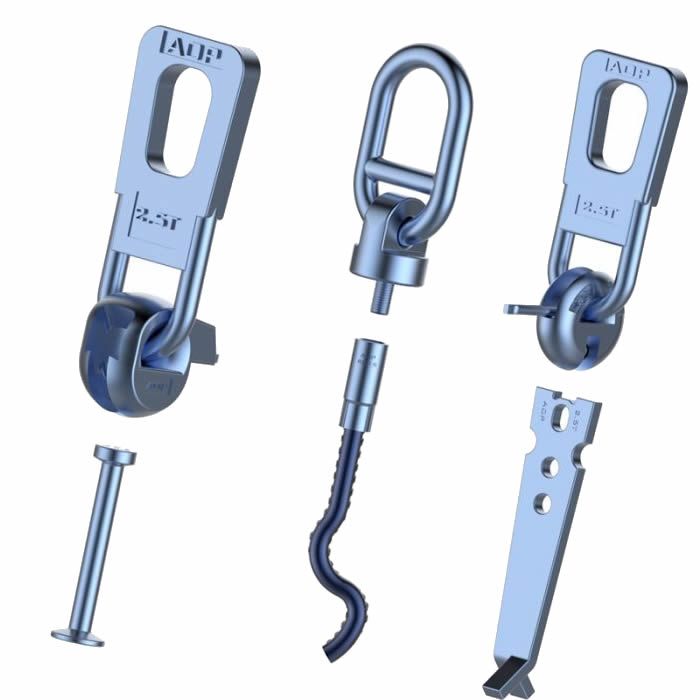
Swift Lift Void Former

In recent years, with the continuous improvement of concrete material requirements in construction engineering, how to scientifically select admixtures to obtain the best performance combination has become a focus of attention in both academic and engineering circles.

.

Guidelines for crack prevention in large volume concrete construction! Full disassembly of core points of GB 50496-2018 standard

Large volume concrete is prone to temperature cracks due to the concentrated hydration heat of cementitious materials, which affects the safety and durability of engineering structures.

Rebar Wheel Spacers

The “Construction Standard for Large Volume Concrete” (GB 50496-2018) implemented in 2018 provides a comprehensive solution for crack prevention throughout the entire process, including raw materials, mix proportions, construction techniques, and temperature monitoring.

Today, we will break down the core points and help construction, supervision, and design units accurately implement compliance requirements, while maintaining the bottom line of quality.

.

Why is there a significant difference in the compressive strength and rebound value of C50 concrete test blocks after conversion?

From the perspective of mix proportion analysis, the assumed volume method is generally used to calculate the concrete density, that is, the sum of the masses of each component material in a 1m3 concrete mixture should be equal to the assumed apparent density, and solved together with the sand ratio expression to obtain the amount of coarse and fine aggregates in each cubic meter of concrete.

Precast Round Ferrule

The assumed apparent density of concrete mixture is generally between 2350-2450kg/m3 (JGJ 55-2011 “Design Specification for Ordinary Concrete Mix Proportion”).

The water cement ratio of high-strength concrete is small, assuming a bulk density of 2350kg/m3 and a slurry ratio.

.

Nine important precautions for concrete pouring that cannot be ignored

When pouring concrete into the mold, it is not allowed to pour and impact the formwork or steel reinforcement skeleton in a concentrated manner.

When the pouring height is greater than 2 meters, a string tube or chute should be used for feeding.

The free height of the pouring from the discharge pipe mouth to the pouring layer should not exceed 1.

5 meters.

Pfeifer VS Box

.

【 Knowledge Base 】 Standard Pouring Process Operation Manual for Highway Precast Beam Concrete

In order to standardize the pouring construction process of precast concrete beams (box beams, T-beams, hollow slab beams) for highway bridges, clarify the quality control points and standards of each process, ensure the internal quality (strength, elastic modulus, durability), appearance quality (uniform color, smooth surface, straight lines), and safe and controllable prestressing tension of precast concrete beams, this guidebook is specially formulated.

PVC Chamfer

.

Analysis of the Influence of Rock Characteristics in Quarry on Aggregate Quality and Concrete Performance

The artificial sand and gravel processing system has developed rapidly in recent years, with significant advances in sand and gravel processing equipment and technology.

Due to the depletion of natural sand and gravel resources, various regions have increased their efforts to protect the environment.

Concrete Plate Anchors

Artificial sand and gravel have replaced natural sand and gravel, leading to a significant increase in their usage and a trend of gradually replacing natural sand and gravel aggregates.

Through engineering examples, the influence of aggregate characteristics on engineering in artificial sand and gravel systems was analyzed.

.

Application of mix design of ultra-fine sand concrete in Libyan engineering

The 5000 housing project in Libya is located in Misrata, Libya, 200km away from the capital city of Tripoli.

Libya is a country that lacks fresh water and has a lot of fine sand.

It is adjacent to the Mediterranean Sea in the north and the vast Sahara Desert in the south, with a subtropical Mediterranean climate.

Coil Loop Insert

Climate characteristics: Warm and rainy in winter, hot and dry in summer; The average temperature in January is 12 ℃, and the average temperature in August is 26oC.

In summer, it is often affected by dry and hot winds from the southern Sahara Desert, and the temperature can reach over 50 ℃; The annual average precipitation is 100-600mm, mostly concentrated in winter.

.