The survival dilemma of concrete enterprises under the environmental protection shutdown

It’s winter again, and the air diffusion is poor, making it easy for mild and severe pollution to occur.

Environmental control has become an insurmountable rigid threshold for the manufacturing industry.

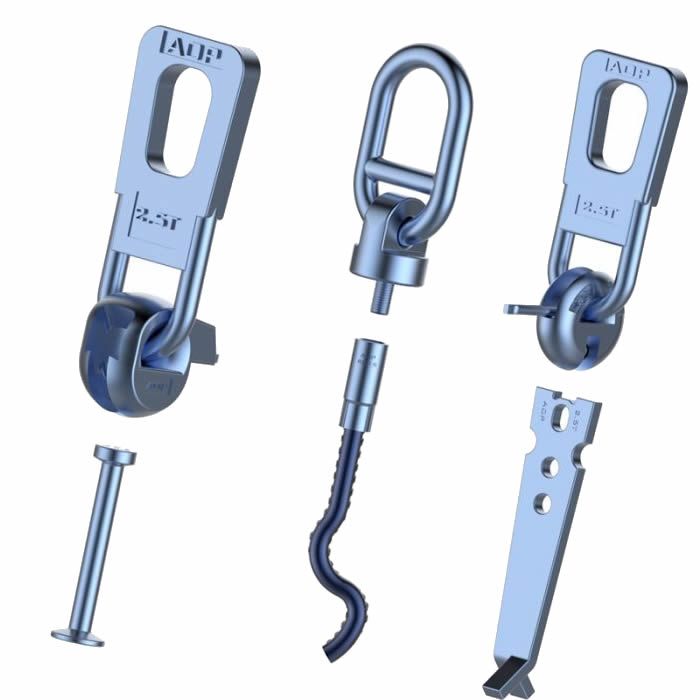
Cast In Plate

The concrete industry, as a fundamental industry in infrastructure construction and a typical representative of traditional high energy consuming and high polluting industries, is facing severe environmental governance pressure.

The implementation of a series of policy requirements, from regional peak shutdown to full process environmental protection transformation, has led concrete enterprises to face multiple challenges such as high raw material procurement costs, limited production and operation, pressure on labor costs, and a sharp increase in environmental investment.

The survival and development space is continuously squeezed, and the industry is undergoing an unprecedented structural adjustment.

.

Are you afraid of freezing when pouring concrete in winter? Senior engineer reveals key winter construction technologies for you

As temperatures gradually decrease, many construction projects are facing the challenge of winter construction.

For property owners and construction parties, the most concerning issue is undoubtedly whether they are afraid of freezing when pouring concrete in winter.

The answer to this question is affirmative – the low temperature environment in winter can indeed have a serious impact on the quality of concrete construction, but if scientific and reasonable protective measures are taken, concrete can be completely avoided from being damaged by freezing.

As professional engineers of Beijing Zhitai Jiahe Reinforcement Company, we will systematically analyze the technical points of winter concrete construction from the perspectives of material science and engineering practice.

Metal Rebar Caps

.

Study on the influence of adding mineral admixtures on the compressive strength of concrete

Concrete, as the most critical foundation material in modern construction engineering, is widely used in various building structures such as high-rise buildings.

The compressive strength of concrete is the core element for measuring its quality, which not only reflects the ability of concrete to withstand external loads, but is also closely related to other properties of concrete.

Double Ended Ferrule

With the continuous development of construction technology and the increasing demand for building material performance, the application of mineral admixtures in concrete is becoming more and more widespread.

The addition of mineral admixtures is mainly aimed at reducing costs and improving resource utilization, but in recent years, their improvement effect on concrete performance has gradually become a research focus.

Based on this, this article intends to study the effect of adding mineral admixtures on the compressive strength of concrete.

.

What quality issues may occur when the pouring temperature of large volume concrete in hydraulic engineering exceeds 30 ℃?

In the construction of water conservancy projects, the pouring of large volume concrete is a crucial step, and its quality directly affects the safety and lifespan of the entire project.

As one of the key factors affecting the quality of concrete, pouring temperature has attracted the attention of engineering personnel.

When the pouring temperature exceeds 30 ℃, it will bring a series of potential quality problems to the concrete.

Crown Foot Anchor

.

Crack control in concrete construction under low temperature conditions

The construction of concrete under low temperature conditions is one of the widely recognized technical issues both domestically and internationally.

Low temperature concrete construction, also known as “winter concrete construction,” refers to concrete construction where the average temperature during construction is below 5 ℃ or the lowest temperature is below -3 ℃.

According to the frost resistance theory of concrete, when the early strength of concrete is below 5 MPa (critical strength), it will be subjected to freezing, which will deteriorate the physical mechanical and architectural technical properties of concrete and produce cracks.

Double Ended Ferrule

.

Technical Guidelines for Jumping Construction of Ultra Large Volume Concrete Structures

To ensure the safety and effectiveness of the building structure, many structural joints such as expansion joints, seismic joints, and settlement joints will be set up in the structural design.

Rebar Bolsters

Expansion joint refers to a structural joint set at an appropriate location along the direction of the construction joint of a building or structure to prevent cracks or damage to the structure due to climate and temperature changes (thermal expansion, contraction).

Expansion joints are used to divide building components such as walls, floors, and roofs (excluding wooden roofs) above the foundation into two independent parts, allowing the building or structure to expand horizontally along its length.

.

Calculation of Design Strength of Concrete over Time

Concrete strength is the core parameter for determining the resistance of concrete structural components, and its variation over time is the basis for establishing a resistance evolution model during service life.

PVC Chamfer

Generally speaking, the strength of concrete increases with age in the early stages, but the growth rate gradually slows down; After entering the middle and later stages, the strength showed a downward trend due to environmental and material degradation.

.

The difference between “experiment” and “test”, “laboratory” and “laboratory” in the concrete industry

In the concrete industry, “experiment” and “test”, “laboratory” and “laboratory” are a set of high-frequency and easily confused professional terms.

They have similar pronunciations and semantic associations, but carry completely different technical connotations and application scenarios, and their standardized use directly affects the accuracy of technical documents.

Swift Lift Void Former

.

Key points to note in winter concrete mix design

Winter concrete faces multiple environmental challenges such as low temperature, slow hydration, and high risk of frost heave.

As the source link of concrete quality control, mix design directly determines the workability, strength development, and long-term durability of concrete in low-temperature environments.

Swift Lift Clutches

Different from the normal temperature mix proportion, the winter mix proportion needs to be systematically optimized based on current specifications such as GB50164-2011 “Quality Control Standards for Concrete”, GB50666-2011 “Construction Code for Concrete Structures”, JGJ55-2011 “Design Specification for Ordinary Concrete Mix Proportion”, etc.

, in order to address the inhibitory effect of low temperature on hydration reaction, frost heave damage mechanism, and workability characteristics.

.

Analysis of Configuration and Construction Quality Control of High Performance Concrete

(1) In addition to cement, water, sand, and stone, various chemical additives and mineral admixtures are also important components of raw materials.

Chemical admixtures and mineral admixtures may be composed of one or more substances, as each cement plant’s cement has different mineral composition, fineness, alkali content, C3A content, gypsum form, and types of admixtures.

Different manufacturers and brands of cement with the same performance will inevitably require different amounts of adhesive and admixtures, which increases the complexity of material selection.

This requires performance matching tests to be conducted on the combination of cement, mineral admixtures, and chemical additives.

Rebar Bolsters

.