On the Reasonable Design Method of Concrete Mix Proportion

Concrete is mainly composed of cement, mixed with several powdered mineral admixtures, water, and additives to form a binder slurry.

Scattered sand and stone are evenly mixed and poured into various models such as beams, columns, and slabs, firmly bonded into a whole engineering material.

Steel Chamfer

In the process of preparing and producing concrete, in addition to requiring the uniformity of the cement-based binder slurry itself, it is also required to separate each sand and stone particle with the slurry through mixing, and then use construction techniques such as vibration to achieve the closest accumulation of sand and stone, and firmly bond them together with the binder.

.

Application of Thermal Insulation and Maintenance Technology in Winter Concrete Construction

In cold northern regions and extreme climate conditions such as high altitude and high latitude, winter concrete construction faces the problem of the impact of low temperature environment on the development of concrete strength, durability, and structural safety.

Low temperature can significantly reduce the hydration reaction rate of concrete, slow the early strength growth, and even cause freezing damage, seriously affecting the engineering quality and service life.

With the continuous advancement of infrastructure construction, the demand for winter construction is increasing day by day.

Plastic Nail Plate

How to ensure that concrete performance meets standards and ensure engineering safety in low-temperature environments has become a key issue that urgently needs to be solved in the field of civil engineering.

Therefore, in-depth exploration of the innovative application of insulation and curing technology for winter concrete construction is of great significance for the technological progress of the industry.

.

Analysis and Prevention of Horizontal Random Cracks in Cement Concrete Pavement

At present, China’s cement production accounts for about 50% of the world’s total output, and has maintained the world’s top position for 21 consecutive years.

Based on the advantages of domestic cement resources, cement concrete pavement is widely used and has played a huge role in the national economic construction and sustainable development.

Shuttering Magnet

During use, it has also been found that a considerable portion of the road surface has structural defects such as cracking, breakage, subsidence, and misalignment to varying degrees, especially transverse cracks (regular and irregular), which not only pose great difficulties for maintenance and repair, but also seriously affect the functionality and service life of the road surface, becoming a technical difficulty that restricts the development of cement concrete pavement.

This article focuses on the analysis of the hazards, causes, and prevention measures of transverse random cracks in cement concrete pavement based on the actual reconstruction project of the Yueqing Mountain Old Connection Highway, in order to provide benefits for future road construction.

.

Literature Sharing 108: Testing and Analysis Evaluation of Rubber Crushed Concrete with Composite Industrial Waste Aggregates and Auxiliary

Under the trend of green and sustainable development in the concrete industry, the use of industrial waste and waste tires to prepare rubber crushed concrete has become a research hotspot.

However, the addition of rubber often leads to a decrease in the mechanical strength of concrete, limiting its engineering applications.

A recent study published in Construction and Building Materials successfully solved this pain point by blending various industrial waste aggregates and mineral admixtures.

Embedment Plate

It not only greatly improved the strength and durability of rubber crushed concrete, but also constructed a machine learning model to achieve accurate prediction of its strength, providing a new idea for the research and application of green concrete.

.

Analysis of the impact of various factors on concrete tax rates ranging from 3% to 13%

In 2026, a seemingly ordinary No.

10 document from the Ministry of Finance triggered a profound interest shock in the construction industry chain.

The document stipulates that from January 1, 2026, the concrete tax rate will be adjusted from 3% to 13%.

Rebar Bolsters

The 10% tax rate difference, like a butterfly flapping its wings, has sparked a game between the first party, construction party, and supplier regarding the logic of value-added tax, contract risks, and survival space.

.

Research on the Design of Multi functional Composite Additives for Concrete in Complex Environments and the Adaptability Control of Strict

The transformation of scientific and technological achievements is a key link in connecting the “last mile” of scientific and technological innovation.

Concrete Plate Anchors

In order to further optimize and implement the transformation of innovative achievements, achieve the docking of scientific and technological achievements with new industries, new models, and new driving forces, and help the First Navigation Bureau seize the technological high ground, this column continues to promote the scientific and technological achievements of the First Navigation Bureau.

Interested enterprises are welcome to inquire and connect.

.

Talking about the tax reform of the concrete industry in 2026, we must clarify these issues!

On January 1, 2026, with the official implementation of Announcement No.

10 of 2026 by the Ministry of Finance and the State Administration of Taxation, the commercial concrete industry ushered in the most drastic tax reform in nearly a decade.

The 3% simple taxation policy, which used to be a reassurance for the industry, has been completely abolished and replaced by a 13% general taxation model.

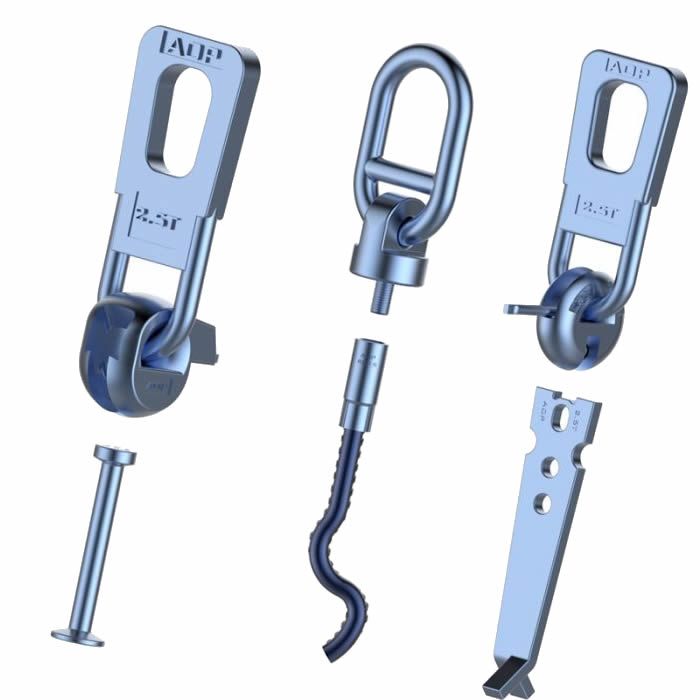
Lifting Socket

This change is not only an adjustment of tax rate figures, but also a watershed for the entire industry to transition from extensive operation to compliance management.

How to deal with old contracts? How to issue invoices for cross period business? How should various departments within the company cooperate? These have become issues that we must clarify.

.