Literature Sharing 178: Early Prediction of Pre mixed Concrete Compressive Strength Based on Machine Learning: A Study on Large scale

Concrete is the most widely used building material globally, and compressive strength is the core indicator for determining structural quality.

The 28 day standard maintenance testing process commonly used in the industry has significant lag: when unqualified batches are discovered, the concrete is often already poured and formed, resulting in extremely high rework costs and even leaving structural safety hazards.

Plastic Rebar Chairs

For high-capacity ready mixed concrete (RMC) mixing plants, the quality confirmation cycle of nearly a month is seriously disconnected from the operational needs of continuous production.

.

Silane impregnating agent: How does the “invisible raincoat” of concrete protect steel bars?

Seawater, deicing salt, and high humidity water vapor will continuously penetrate inward through the pores of concrete.

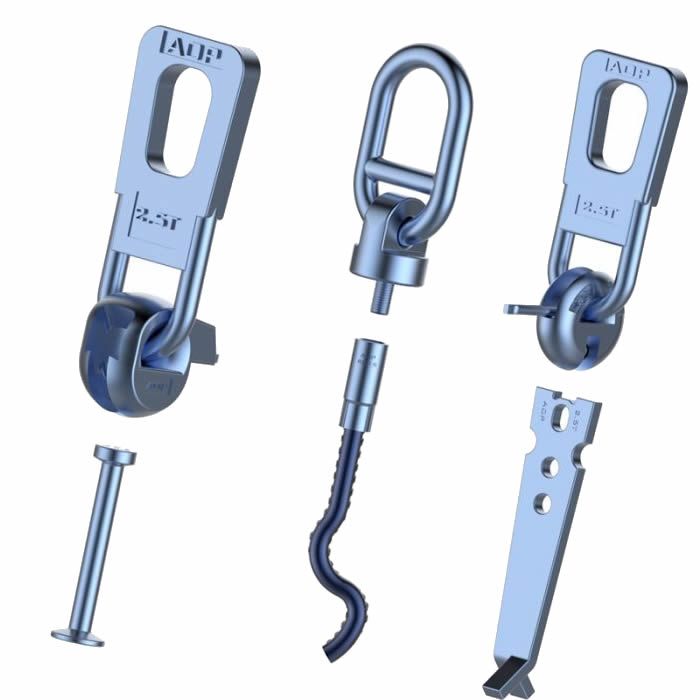
Edge Lift Anchor

Once they come into contact with the internal steel bars, they will cause corrosion, volume expansion, and ultimately lead to concrete peeling, cracking, and flaking, greatly shortening the service life of the building.

.

Pre mixed concrete information price in June 2026

According to the Notice on the Revision of the Shaanxi Province Engineering Cost Information Material Information Price Catalog issued by the Shaanxi Provincial Construction Engineering Cost Service Center, starting from February 2025, the information price of ready mixed concrete will be re included in the Shaanxi Engineering Cost Information and published in the form of a special report.

Embedment Plate

According to the “Value Added Tax Law of the People’s Republic of China” and the “Announcement on the Connection of Value Added Tax Preferential Policies after the Implementation of the Value Added Tax Law” (Announcement No.

10 of 2026 by the Ministry of Finance and the State Administration of Taxation), the tax inclusive price of ready mixed concrete will be published at a general taxpayer tax rate of 13% starting from February 2026.

.

What issues should be noted when pouring pile foundation concrete underwater?

This includes the inspection of various mechanical equipment (such as mixing equipment, tank trucks, cranes, conveying pumps, etc.

), as well as the inspection of supports, hoppers, conduits, hole cleaning equipment (including air compressors, air ducts, etc.

Lifting Socket

), concrete transport vehicles, etc.

used for pouring concrete, to ensure their normal use during construction.

.

Concrete creep testing: using science to predict the future

As the most common building material, concrete’s mechanical properties include not only static parameters such as strength and elastic modulus, but also deformation characteristics under long-term bearing conditions.

Concrete Lifting Clutch

Creep refers to the irreversible deformation of concrete that gradually occurs over time under constant stress.

This phenomenon is particularly important in long-term load-bearing structures such as bridges, large buildings, and dams, as it can lead to structural deformation, cracks, and even safety hazards!.

High performance concrete series – ultra-high toughness cement-based composite materials

ECC = Engineered Cementitious Composite, In 1992, Professor Victor C.

Li from the University of Michigan proposed that the matrix is cement slurry or mortar (note: does not contain coarse aggregates, similar to UHPC), with fibers (usually PVA polyvinyl alcohol fibers, but also PE polyethylene fibers) as reinforcement materials, designed through micro mechanics and fracture mechanics principles – this sentence is key.

Swift Lift Foot Anchor

ECC is not simply “adding more fibers to concrete”, but a material system designed in reverse from the mechanical parameters of fibers, matrix, and interface, which is also the origin of the term “Engineering Design”.

.

Literature Express | Carbon Footprint Study of Ordinary and High Strength Concrete Used in Low rise and High rise Buildings

The construction industry is an important source of greenhouse gas emissions, with cement production accounting for approximately 7% of global carbon emissions, of which 95% come from limestone calcination.

Traditional strategies focus on using auxiliary cementitious materials to replace some of the clinker in order to reduce carbon emissions per unit volume of concrete; The performance strategy reduces the amount of structural materials used by using high-strength concrete.

However, the carbon emissions during the production stage of high-strength concrete are higher, and its comprehensive carbon footprint needs to be evaluated specifically based on the type of building.

Ferrule Loop Insert

.

Literature Express | Low carbon Enhancement of Fly Ash Geopolymer Concrete: Lateral Deformation, Microstructure Evolution, and Environmental

Cement production is one of the main industrial sources of carbon emissions, while fly ash is a byproduct of coal-fired power plants, occupying land and polluting the environment.

FGC utilizes fly ash to form geopolymer cementitious materials through alkali activation, which can significantly reduce the amount of ordinary Portland cement used and thus lower carbon emissions.

This is of great significance for the resource utilization of industrial solid waste.

However, traditional FGC requires high-temperature steam curing to achieve optimal mechanical properties, and energy consumption and carbon emissions offset some environmental benefits, which limits its engineering promotion and application.

The addition of a small amount of OPC can achieve the solidification and hardening of FGC at room temperature, which is a key technical route to solve this contradiction.

Swift Lift Clutches

However, its impact on the mechanical properties and microstructure evolution of FGC still needs to be systematically studied.

.