The value-added tax on commodity concrete has increased from 3% to 13%, and the bidding price will be directly increased by 10%? 90% of cost

Starting from January 1, 2026, according to Announcement No.

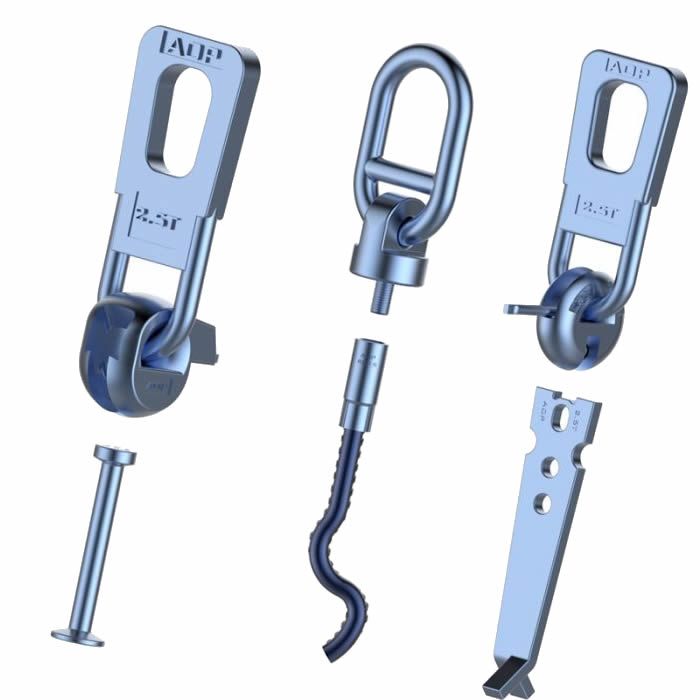
Erection Anchor

10 of 2026 issued by the Ministry of Finance and the State Administration of Taxation, the simple 3% tax calculation policy for commercial concrete that has been in use for more than ten years will be officially abolished, and all self-produced ready mixed concrete will be uniformly subject to a general tax rate of 13%.

Recently, countless general contractors and cost colleagues have sent private messages asking: Is the increase in the mixed use tax rate from 3% to 13 points a direct increase in procurement costs for construction units? Should the bidding price be increased? Can we make up for the tax difference in the settlement of old projects?.

Core causes of sanding and dusting on concrete floors

(1) Raw material issues: 1.

Low cement grade/insufficient amount.

Priority should be given to C25/C30 for the ground.

Swift Lift Foot Anchor

If low-grade cement is used or the cement content in the mortar layer is too low, the hydration strength will be insufficient, and the surface will become loose and powdery.

2.

The sand content exceeds the standard, and there are many impurities in yellow soil and silt, which wrap around cement particles and cannot form effective bonding.

After completion, it will start to dust as soon as it is rubbed; The standard requires sand to have a mud content of ≤ 3%.

3.

If the water cement ratio is too high (the most common), water can be added randomly during construction .

.

.

5 Common Quality Problems of Municipal Concrete Pavement | Minimalist Causes+Preventive Measures

Early damage to municipal concrete pavement is mostly caused by rough construction and improper maintenance, rather than material issues.

Rebar Bolsters

Below is a brief summary of the top 5 common quality issues at the construction site, with straightforward reasons and practical measures, suitable for on-site construction and quality inspection disclosure reference.

.

It is strictly prohibited to add water arbitrarily during the pouring of cement concrete pavement

According to the “Technical Specification for Construction of Highway Cement Concrete Pavement” JTG/T F30 and the “Code for Construction and Quality Acceptance of Urban Road Engineering” CJJ1, after the commercial concrete/on-site mixed concrete is transported to the paving site, except for the admixture dilution allowed by the laboratory, it is not allowed to add water arbitrarily; Only when the slump loss exceeds the standard and is confirmed by the supervisor and laboratory, can cement, water, and additives be added synchronously according to the mix proportion.

Simply adding water is a serious violation of regulations.

Lifting Anchor

.

Review of ESCE Engineering Frontier Papers | Microcapsule Self healing Concrete: Bibliometric Analysis

With the rapid development of self-healing technology, the comprehensive performance of microcapsule self-healing cement-based materials has been significantly improved.

This study provides a systematic review of the current research status of microcapsule self-healing concrete.

Based on bibliometric methods, the research progress and hotspot evolution in this field were evaluated from multiple dimensions such as publication time distribution, research institutions, countries (regions), and citation networks.

Cast in Loop

Based on this, the latest improvement achievements in performance optimization of microcapsule self-healing cement-based composite materials were summarized.

.

Daily Science Popularization: Finally Understand What is the Impermeability Grade of Concrete

The damp corners of the basement walls, dripping water from the garage roof, and peeling of the roof during the rainy season can easily lead people to think: Is concrete inherently prone to leakage? Even though they are made of concrete, water tanks, subway side walls, and underground garage exterior walls can also provide long-term water retention.

Swift Lift Void Former

The difference lies not only in the waterproofing membrane, but also in whether the concrete itself has sufficient impermeability.

.

【 Ju Rong Di Dian 】 Conduct technical briefing to ensure the quality of each concrete square

Ju Rong adheres to the concept of “Ju Xin follows the Tao, Rong Yuan benefits others” and always puts product quality first.

In order to implement quality work, Xinqiao Company has recently carried out job recognition and practical briefing for technicians and mixing plant operators, unifying standards and processes, and solidly doing a good job in every concrete mix.

Plastic Nail Plate

.

Factors affecting the carbonation depth of concrete

The main components of concrete are cement, admixtures, coarse and fine aggregates, water, and additives.

In the mixing of cement and concrete, the main component of cement is CaO.

After hydration, Ca (OH) 2 is generated.

The carbonation of concrete refers to the chemical reaction between Ca (OH) 2 in concrete and CO2 in the air.

CO2 gas in the air penetrates into the concrete and reacts with alkaline substances to produce carbonate and water.

The process of reducing the alkalinity of concrete is called concrete carbonation, also known as neutralization.

Its chemical reaction is: Ca (OH) 2+CO2=CaCO3+H2O, producing neutral carbonate CaCO3.

Plastic Rebar Chairs

Unbaked concrete is alkaline, and the minimum (critical) alkalinity for steel bars in concrete to remain passive is a pH value of 11.

5.

Carbonized concrete has a pH value of 8.

5-9.

5, indicating that carbonation reduces the alkalinity of concrete.

.

What is shotcrete

Shocked concrete is a type of concrete, which is also made by mixing sand, stone, cement, water, and admixtures in a certain proportion.

However, shotcrete is a type of concrete that is sprayed at high speed through a pipeline using spraying machinery to solidify and harden on the sprayed surface.

Edge Lift Anchor

.