How to pour high-rise concrete? The practical skills of this internal climbing equipment are universal on construction sites

In the construction of high-rise buildings in industrial parks, concrete pouring is the core process that determines the construction progress and project quality.

Traditional fabric poles rely heavily on tower cranes for lifting, requiring disassembly, relocation, and takeover at each level.

This not only consumes a large amount of tower crane resources and delays the construction period, but also poses significant safety hazards during high-altitude disassembly and assembly operations.

In response to the construction pain points of high-rise standard floors, Kenile Heavy Industry has optimized and upgraded the climbing hydraulic fabric machine in the elevator shaft.

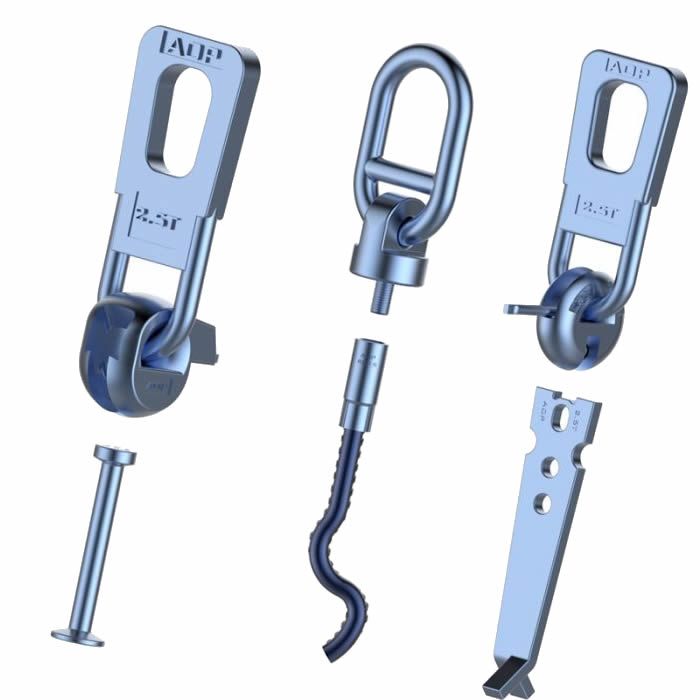
Cast In Plate

The equipment utilizes the layout of building elevator shafts, without the need for tower crane assistance or frequent disassembly and assembly.

It can climb layer by layer independently, perfectly adapting to the standardized continuous pouring construction of high-rise industrial parks and office buildings, truly achieving “efficiency improvement, risk reduction, and cost savings”.

.

Hubei concrete enterprise batch certification! Nearly a hundred companies have been publicly announced in 2026, have you caught up with the

Currently, the ready mixed concrete industry in Hubei Province is standing at a critical juncture of green transformation.

Cast In Plate

With the intensive introduction and implementation of a series of policies and regulations, the certification of concrete enterprises has changed from an “optional” to a “mandatory” option.

Certification is not a matter of whether or not to do it, but rather if we don’t take action, it will be too late.

.

IF=18.1! Subverting tradition: It is recommended that all concrete researchers study this top publication, which may become a trend in the

Traditional concrete material research has long relied on “trial and error” experimental mix proportions and empirical formula calculations.

Researchers gradually approach the optimal performance solution through limited cementitious material combinations, water cement ratios, aggregate gradation, and curing system schemes, supplemented by mechanical testing and microscopic characterization.

However, as a typical multiphase heterogeneous composite, the hydration process of concrete involves multi-step chemical reaction of cement water admixture, complex microstructure evolution of interface transition zone (ITZ), and multi-scale coupling effect from nanoscale C-S-H gel to macro aggregate skeleton.

Steel Chamfer

In addition, the introduction of industrial solid waste (such as fly ash, slag, silica fume, etc.

) and recycled aggregates has led to a rapid expansion of the spatial dimension of mix proportion parameters – traditional methods are like searching for a needle in a haystack, which is not only time-consuming and laborious, but also difficult to capture the collaborative optimization potential hidden in nonlinear interaction relationships.

.

How to choose concrete sand and gravel aggregates? Clarify the core quality requirements in one go

Many people think that the quality of concrete only depends on cement, but in fact, sand and gravel aggregates account for more than 70% of the volume of concrete.

Plastic Nail Plate

The quality of aggregates directly determines the strength, compactness, and durability of concrete, and is also the core cause of cracking, sanding, and insufficient strength.

.

New regulations from the Ministry of Housing and Urban Rural Development! The national standard “Concrete Quality Control Standards (Revised

Recently, the Ministry of Housing and Urban Rural Development released the draft of the “Concrete Quality Control Standards (Revised for Soliciting Opinions)”, which directly addresses the pain points of the industry: steel slag should not be used as coarse aggregate, nor should it be used as fine aggregate.

Cast In Plate

In just two short sentences, it completely ended the industry operation path of “steel slag mixed with concrete and solid waste disposal and reuse” in China for many years, and blocked all channels for steel slag to be used as building concrete aggregates from the source.

.

Is cost reduction and efficiency improvement a true proposition or a false proposition

From the perspective of the author’s contact, some technical personnel believe that reducing costs and increasing efficiency of concrete is a technical route that can be implemented under the advancement of material technology; Another group of frontline practitioners directly classify it as a pseudo proposition.

Concrete Plate Anchors

The fundamental reason for the divergence is the confusion between cost reduction through compliant technology and speculative cost reduction through sacrificing quality.

In fact, most experienced personnel know that concrete can achieve cost reduction and efficiency improvement through technology, proportioning, management, and supply chain optimization while meeting specifications, strength, durability, and construction performance.

This is the beneficial way to reduce costs and increase efficiency.

Simply relying on reducing adhesive materials, using inferior materials, and minimizing necessary testing and after-sales service, only pursuing a decrease in numbers on paper, without considering the comprehensive performance of concrete workability, strength, durability, etc.

, is a false cost reduction, which may lead to greater losses such as cracking, insufficient strength, and even rework in the later stage.

.