Innovative Design Report on C30 High Performance Concrete Mix Proportion

This report focuses on the engineering application requirements of C30 high-performance concrete, with the core innovation goal of “low-carbon environmental protection, high strength durability, excellent workability, and controllable cost”.

Combining the characteristics of mainstream raw materials and cutting-edge concrete technology, the mix proportion optimization design is completed.

The design strictly follows standards such as the “Design Specification for Ordinary Concrete Mix Proportion” (JGJ55-2011) and the “Technical Specification for Application of High Performance Concrete” (CECS 207-2006).

Halfen Channel

Through the collaborative optimization of multi-component materials, efficient utilization of admixtures, and admixture compounding technology, the synergistic improvement of concrete performance, environmental benefits, and economic benefits is achieved.

This mix proportion is suitable for ordinary building structures, large volume concrete projects, and civil and industrial buildings with high durability requirements, providing technical support for the application of concrete in related projects.

.

Technology | Core Summary of the Influence of Different Cement Admixtures on the Performance of Highway Cement Concrete Structures

1.

Project overview: The total length of the project route is 2.

Cast in Loop

516km, which is constructed according to the standard of two-way four lane municipal first-class highway.

72% of the subgrade along the route is in Class IV self weight collapsible loess stratum, with a collapsibility coefficient of 0.

025~0.

057, a thickness of 5~14m, and a weak foundation bearing capacity (90~120kPa).

.

20 yuan processing fee! Start a new model of integration in the concrete industry!

A new type of concrete sales model has emerged in regions such as Anhui and Xi’an.

Previously, it involved directly acquiring mixing plants, often costing tens of millions or even hundreds of millions.

Such a large investment is undoubtedly a suicidal act in the current industry situation.

Therefore, the following new type of concrete sales method has emerged.

Metal Rebar Caps

.

Analysis of Key Quality Issues in Concrete Construction

In concrete construction, material differences, environmental fluctuations, and insufficient material adaptation can easily lead to rapid slump loss, poor aggregate gradation, high powder content (MB value) of machine-made sand, and incompatibility between polycarboxylate admixtures and cementitious materials, which directly affect the performance of concrete and lay quality hazards.

Steel Rebar Chairs

This article briefly explains the diseases, causes, and practical treatment methods of each problem, providing accurate guidance for on-site construction.

.

The close cooperation of the construction unit is the key to ensuring the quality of winter concrete

When pouring concrete for side walls and columns, the concrete should be layered, and the thickness of each layer should not exceed 400mm.

The concrete for beams and slabs should be poured simultaneously, starting from one end and advancing forward.

Pfeifer VS Box

The area should be minimized as much as possible during concrete pouring.

Attention should be paid to compacting the bottom and sides of the beam, and the vibrator should not directly touch the steel bars or embedded parts.

The virtual laying thickness of the concrete slab should be slightly greater than the thickness of the slab.

After vibration, it should be smoothed with a wooden trowel and then covered with plastic film.

The insulation layer should be promptly laid on top of it.

.

Understand the value of load dynamic coefficient for reinforced concrete structures in one article

When a structure is subjected to dynamic loads (such as vibration, impact, earthquake), due to the fast speed of the load, the structure will generate inertial forces, resulting in internal forces, deformations, and other responses greater than the effect of static loads of the same magnitude.

The dynamic coefficient is a factor that amplifies the static load when converting the dynamic load value into an equivalent static load value for calculation.

It reflects the ratio of the response of the structure under dynamic action to the response under static action.

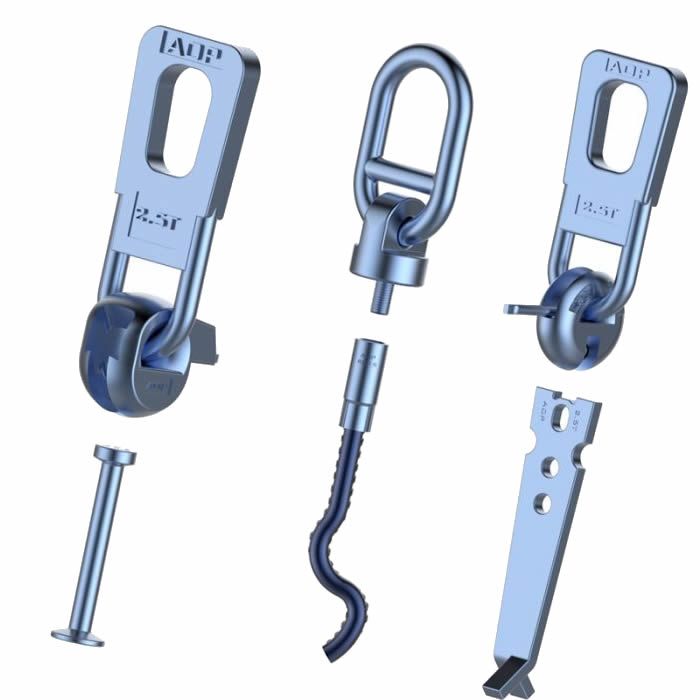
Spherical Head Anchor

Article 5.

6.

1 of the Load Code for the Design of Building Structures GB50009-2012: For the dynamic calculation of building structure design, when there is sufficient basis, the self weight of heavy objects or equipment can be multiplied by the dynamic coefficient and designed according to the static calculation method.

.