Concrete creep testing: using science to predict the future

As the most common building material, concrete’s mechanical properties include not only static parameters such as strength and elastic modulus, but also deformation characteristics under long-term bearing conditions.

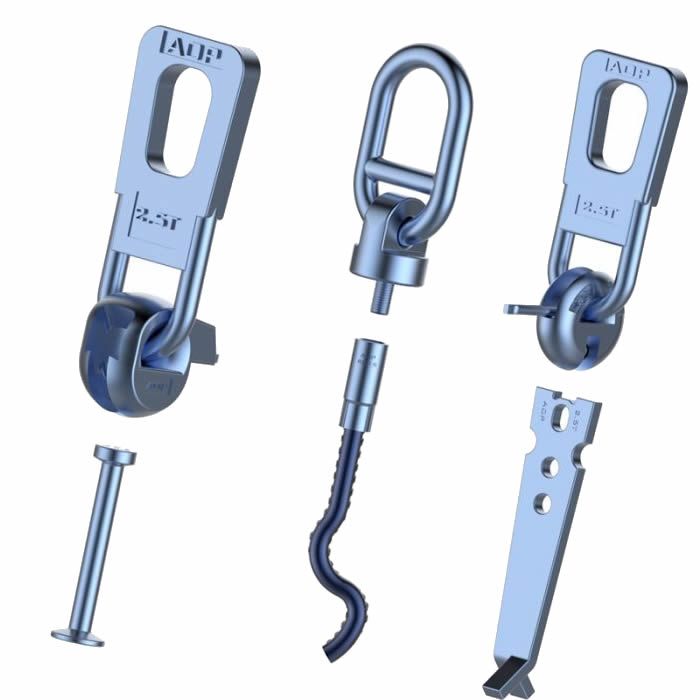
Concrete Lifting Clutch

Creep refers to the irreversible deformation of concrete that gradually occurs over time under constant stress.

This phenomenon is particularly important in long-term load-bearing structures such as bridges, large buildings, and dams, as it can lead to structural deformation, cracks, and even safety hazards!.

High performance concrete series – ultra-high toughness cement-based composite materials

ECC = Engineered Cementitious Composite, In 1992, Professor Victor C.

Li from the University of Michigan proposed that the matrix is cement slurry or mortar (note: does not contain coarse aggregates, similar to UHPC), with fibers (usually PVA polyvinyl alcohol fibers, but also PE polyethylene fibers) as reinforcement materials, designed through micro mechanics and fracture mechanics principles – this sentence is key.

Swift Lift Foot Anchor

ECC is not simply “adding more fibers to concrete”, but a material system designed in reverse from the mechanical parameters of fibers, matrix, and interface, which is also the origin of the term “Engineering Design”.

.

Literature Express | Carbon Footprint Study of Ordinary and High Strength Concrete Used in Low rise and High rise Buildings

The construction industry is an important source of greenhouse gas emissions, with cement production accounting for approximately 7% of global carbon emissions, of which 95% come from limestone calcination.

Traditional strategies focus on using auxiliary cementitious materials to replace some of the clinker in order to reduce carbon emissions per unit volume of concrete; The performance strategy reduces the amount of structural materials used by using high-strength concrete.

However, the carbon emissions during the production stage of high-strength concrete are higher, and its comprehensive carbon footprint needs to be evaluated specifically based on the type of building.

Ferrule Loop Insert

.

Literature Express | Low carbon Enhancement of Fly Ash Geopolymer Concrete: Lateral Deformation, Microstructure Evolution, and Environmental

Cement production is one of the main industrial sources of carbon emissions, while fly ash is a byproduct of coal-fired power plants, occupying land and polluting the environment.

FGC utilizes fly ash to form geopolymer cementitious materials through alkali activation, which can significantly reduce the amount of ordinary Portland cement used and thus lower carbon emissions.

This is of great significance for the resource utilization of industrial solid waste.

However, traditional FGC requires high-temperature steam curing to achieve optimal mechanical properties, and energy consumption and carbon emissions offset some environmental benefits, which limits its engineering promotion and application.

The addition of a small amount of OPC can achieve the solidification and hardening of FGC at room temperature, which is a key technical route to solve this contradiction.

Swift Lift Clutches

However, its impact on the mechanical properties and microstructure evolution of FGC still needs to be systematically studied.

.

The relationship between methylene blue of sand and mud content and its influence on the dosage of concrete water reducing agent

The main sand and gravel system parent rock is limestone in four material yards: Xinyan, Huajie, Machangping, and Xinjie; There are five material yards with dolomite as the parent rock: 771, Xiangyuan, Madaobian, Lubi, and Wujiayuan.

The experiment mainly conducted a relationship test between methylene blue and mud content in six sand and gravel production sites, established a formula for the relationship between methylene blue and mud content, calculated the mud content of the sand from it, and calculated the cost of water reducer per cubic meter of concrete based on the different dosage of water reducer used for different mud contents.

Double Ended Ferrule

In addition, a comparative experiment was conducted on the water reducing agent dosage between the medium stone backfilled sand (medium stone backfilled sand with relatively low mud content) and ordinary machine-made sand (produced from ordinary raw materials) in the Ma Dao Border Material Yard; Conduct comparative tests on the addition of water reducing agents and compressive strength results of different methylene blue sands in the new rock material yard using the same concrete mix ratio.

.

Accuracy and influencing factors of rebound method for detecting concrete strength

In the field of modern construction engineering, concrete is one of the most widely used structural materials, and its strength directly affects the safety, durability, and service life of the structure.

Lifting Anchor

Accurately measuring the strength of concrete has become a key link in ensuring engineering quality.

At present, there are many methods for testing the strength of concrete, and the rebound method has been widely used in practical engineering due to its non-destructive, convenient operation, and ability to quickly detect structures that have reached their age.

However, due to the susceptibility of rebound method to various external factors, there may be certain errors in the detection results, which in turn affects the accurate evaluation of engineering quality.

Under the trend of constantly pursuing high quality and precision in the construction industry, it is of great practical significance to deeply analyze the accuracy and influencing factors of rebound method in detecting concrete strength, in order to improve the accuracy of rebound method detection and ensure the reliability of engineering quality evaluation.

.

C70 High Performance Concrete Construction Technology Disclosure

The Minzhi Commercial Center project supplied by our company consists of 4 towers as the main building, of which 3 towers have C70 high-performance concrete for the outer frame columns below the 30th floor.

The total construction area of the project is 81488m2, with 4 basement floors and C70 high-performance concrete for the outer frame columns from the basement to the 30th floor.

The design life of the project is 100 years.

Fixing Socket

.

Quick report: Production and economic indicators of concrete and cement products industry from January to May 2026

According to data analysis from the National Bureau of Statistics, from January to May 2026, the cumulative output of key products in the concrete and cement products industry has both decreased and increased.

Among them, the cumulative production decline of commodity concrete and cement drainage pipes has expanded compared to January April, the cumulative production decline of concrete poles has narrowed compared to January April, the cumulative production decline of precast concrete piles has remained the same compared to January April, and the cumulative production growth rate of cement pressure pipes has changed from negative to positive, with a significant increase.

Crown Foot Anchor

.

Literature Express | Prediction of compressive strength of sustainable pumice concrete: research on interpretable mixed learning model

Cement production is one of the important sources of global CO ₂ emissions, and the development of sustainable concrete materials is of great significance for reducing carbon emissions.

Floating stone concrete can improve its durability while reducing environmental burden by adding floating stones to replace some of the cement used.

However, the mix design of pumice concrete involves the interaction of multiple materials, and predicting the 28 day compressive strength faces challenges.

Traditional empirical formulas have limited accuracy, and although machine learning models can improve prediction accuracy, a single algorithm has shortcomings in generalization ability.

Steel Chamfer

This study constructed a hybrid ensemble learning model based on grey wolf optimizer to achieve high-precision prediction of compressive strength of pumice concrete, and provided interpretable engineering insights through SHAP analysis.

.

Literature Express | Study on the Sulfate Corrosion Resistance of Concrete with Copper Slag as Auxiliary Cementitious Material

Sulfate corrosion is one of the main factors leading to a decrease in the durability of concrete structures.

After being corroded by sulfate, concrete usually undergoes deterioration phenomena such as expansion, cracking, and peeling.

Rebar Bolsters

The corrosive sulfate ions react with cement hydration products to produce gypsum and ettringite, leading to volume expansion and internal damage.

This study uses copper slag as an auxiliary cementitious material to replace some cement, and systematically evaluates its impact on the sulfate resistance of concrete.

.