Literature Review | The Influence of Fine Low Carbon Rice Husk Ash on the Microstructure and Properties of Mixed Cement Concrete

Cement production emits a large amount of CO ₂ (approximately 0.

6-1.

0 tons per ton of cement), making it a carbon intensive process.

Replacing some cement with auxiliary cementitious materials (SCMs) is an effective way to reduce carbon emissions.

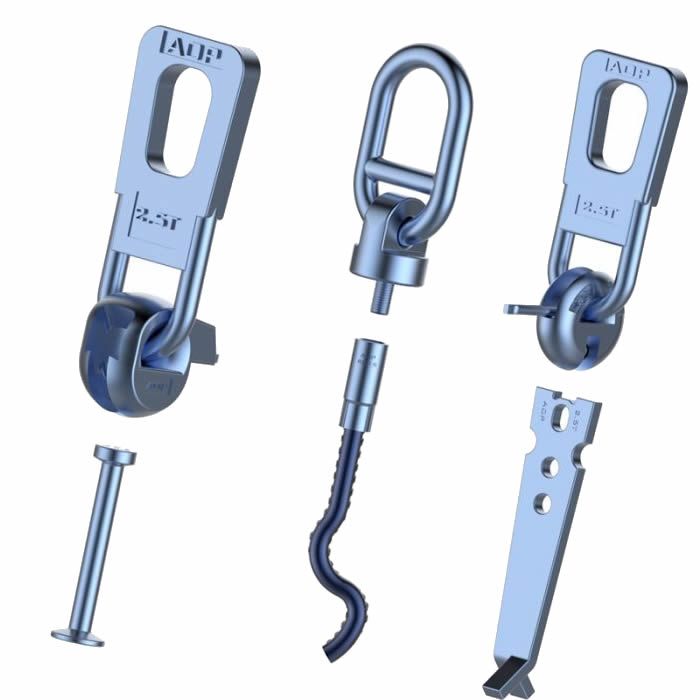
Precast Lifting Clutch

Commonly used SCMs include fly ash, silica fume, and granulated blast furnace slag, but these industrial by-products also emit CO ₂ during the production process.

In recent years, rice husk ash (RHA) has received widespread attention as a source of agricultural waste SCMs.

.

Literature Express | Study on Durability, Ecological Benefits, and Carbon Emission Effects of Lithium containing Solid Waste Concrete

The cement and concrete industries are important sources of carbon emissions, and achieving the dual carbon goals poses an urgent requirement for the sustainable development of the construction industry.

Industrial solid waste, as a concrete admixture or aggregate substitute material, can effectively reduce natural resource consumption and solid waste storage, and has significant carbon emission reduction benefits.

Lithium slag is a byproduct of lithium salt extraction process, with approximately 10 tons of lithium slag produced for every 1 ton of lithium salt produced.

Its resource utilization is of great significance for environmental protection.

Existing research has focused on the application of lithium slag in cement-based materials, but systematic research on the durability of lithium slag based concrete is still lacking.

This study prepared C50 and C60 graded solid waste concrete and systematically studied its durability, ecological safety, and carbon emission benefits.

Concrete Lifting Clutch

.

Literature Express | Low Carbon High Strength Concrete: Study on the Synergistic Effect of Large Batch Solid Waste Materials and AR Glass

Traditional high-strength concrete requires a large amount of cement and has high carbon emissions, posing challenges to the sustainable development of the construction industry.

Steel Chamfer

Industrial solid waste as a concrete admixture instead of cement can effectively reduce carbon emissions and minimize solid waste storage.

CWP has a high annual output and low resource utilization rate; GP has volcanic ash activity; GWP has a micro aggregate filling effect.

This study systematically investigated the influence of three types of solid waste materials with high content replacing cement on the mechanical properties and durability of HSC.

.

Design and Quality Control of Colored Clear Water Concrete Mix Proportion

With the continuous progress of society, people’s aesthetic of architecture is gradually improving.

The original texture of concrete has been loved by many designers at home and abroad, and as one of them, fair faced concrete is widely used in various buildings.

Ordinary plain concrete is mainly gray white in color, with a relatively single color.

In order to add wonderful colors and textures to the solemn and atmospheric foundation of concrete, designers have tried to inject pigments into concrete mixtures, and colored plain concrete has emerged.

Among them, colored clear water high-performance concrete refers to combining different colored pigments with clear water concrete to achieve the integration of the building as a whole with the surrounding environment.

Lifting Socket

At the same time, adding a certain amount of steel fibers or synthetic fibers can make the concrete meet high-performance requirements.

.

Who is the ‘invisible guardian’ of concrete quality

On the construction site, concrete is the most silent protagonist.

It pours out of the tanker like rushing magma, solidifies and becomes as hard as rock, supporting the bones of high-rise buildings and the backbone of bridges.

But in this transformation from slurry to stone, there are countless pairs of invisible hands – someone is weighing powder to two decimal places in the laboratory, someone is staring at the rotating tank next to the tanker, and someone is listening to the “buzzing” of the vibrating rod by the template.

If asked who can control the quality of concrete? The answer is hidden in every drop of sweat on the construction site, every bit of truth, like a symphony played by multiple people, without any part, it may be out of tune.

Coil Loop Insert

.

Technology for breaking the pile head of concrete cast-in-place pile by ring cutting method

The Ministry of Housing and Urban Rural Development has issued clear regulations: for building construction projects with a foundation design grade of Class B or above, the direct chiseling method shall not be used for the pile head of the cast-in-place pile.

Coil Loop Insert

It is recommended to use two alternative processes: “pre cutting method+mechanical chiseling” and “ring cutting method”.

The ring cutting method is currently the most widely used pile head breaking method due to its flexible operation and controllable quality.

.

Is the concrete wall still rusting? 99% of people make mistakes!

1.

The protective layer of steel bars is relatively thin.

In a type of environment (indoor dry environment), which is a house that has been inhabited for 50 years, the floor and interior walls are 15mm, and the beams and columns are 20mm.

Swift Lift Clutches

Of course, the concrete strength here is taken as c30, and the strength is reduced by one level and the protective layer is increased by 5mm.

If the protective layer is thin, chloride ions in air or water can easily penetrate the thin protective layer and corrode the steel bars.

So, what factors can cause the protective layer to be thin?.

When to apply the rebound test block correction method to test the strength of concrete, and how to rebound the test block?

During on-site concrete strength testing, the rebound core correction method is more commonly used, while the rebound test block correction method is less commonly used.

Plastic Rebar Chairs

How to deal with the situation where the standard curing and test blocks under the same conditions are met for the construction project mentioned earlier, but the rebound strength is insufficient? As introduced, there are generally three tests for compressive strength of concrete during the construction process: standard curing test blocks during inspection batch acceptance, same condition curing test blocks during sub acceptance, and engineering quality supervision sampling during main structure acceptance (mainly using rebound method for testing, and a small amount of core drilling is used for “verification” of foundation raft and other materials that cannot use rebound method).

.