Accuracy and influencing factors of rebound method for detecting concrete strength

In the field of modern construction engineering, concrete is one of the most widely used structural materials, and its strength directly affects the safety, durability, and service life of the structure.

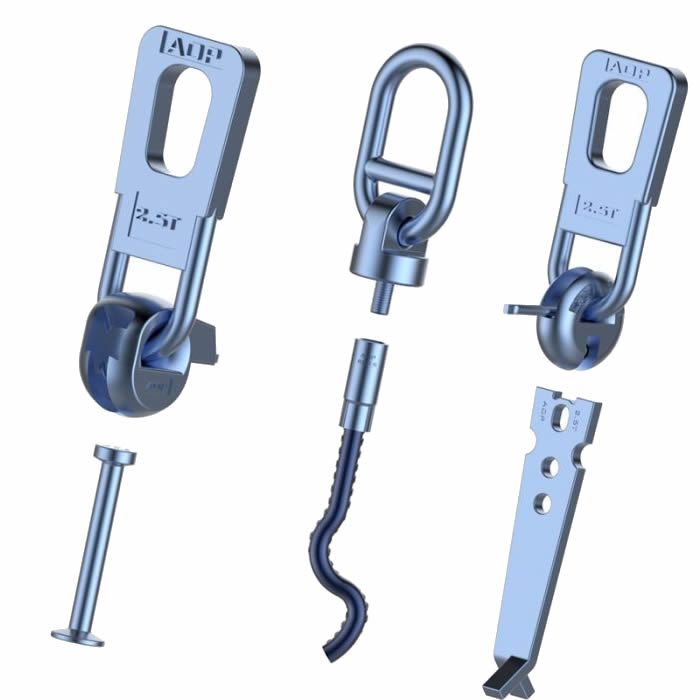
Lifting Anchor

Accurately measuring the strength of concrete has become a key link in ensuring engineering quality.

At present, there are many methods for testing the strength of concrete, and the rebound method has been widely used in practical engineering due to its non-destructive, convenient operation, and ability to quickly detect structures that have reached their age.

However, due to the susceptibility of rebound method to various external factors, there may be certain errors in the detection results, which in turn affects the accurate evaluation of engineering quality.

Under the trend of constantly pursuing high quality and precision in the construction industry, it is of great practical significance to deeply analyze the accuracy and influencing factors of rebound method in detecting concrete strength, in order to improve the accuracy of rebound method detection and ensure the reliability of engineering quality evaluation.

.

C70 High Performance Concrete Construction Technology Disclosure

The Minzhi Commercial Center project supplied by our company consists of 4 towers as the main building, of which 3 towers have C70 high-performance concrete for the outer frame columns below the 30th floor.

The total construction area of the project is 81488m2, with 4 basement floors and C70 high-performance concrete for the outer frame columns from the basement to the 30th floor.

The design life of the project is 100 years.

Fixing Socket

.

Quick report: Production and economic indicators of concrete and cement products industry from January to May 2026

According to data analysis from the National Bureau of Statistics, from January to May 2026, the cumulative output of key products in the concrete and cement products industry has both decreased and increased.

Among them, the cumulative production decline of commodity concrete and cement drainage pipes has expanded compared to January April, the cumulative production decline of concrete poles has narrowed compared to January April, the cumulative production decline of precast concrete piles has remained the same compared to January April, and the cumulative production growth rate of cement pressure pipes has changed from negative to positive, with a significant increase.

Crown Foot Anchor

.

Literature Express | Prediction of compressive strength of sustainable pumice concrete: research on interpretable mixed learning model

Cement production is one of the important sources of global CO ₂ emissions, and the development of sustainable concrete materials is of great significance for reducing carbon emissions.

Floating stone concrete can improve its durability while reducing environmental burden by adding floating stones to replace some of the cement used.

However, the mix design of pumice concrete involves the interaction of multiple materials, and predicting the 28 day compressive strength faces challenges.

Traditional empirical formulas have limited accuracy, and although machine learning models can improve prediction accuracy, a single algorithm has shortcomings in generalization ability.

Steel Chamfer

This study constructed a hybrid ensemble learning model based on grey wolf optimizer to achieve high-precision prediction of compressive strength of pumice concrete, and provided interpretable engineering insights through SHAP analysis.

.

Literature Express | Study on the Sulfate Corrosion Resistance of Concrete with Copper Slag as Auxiliary Cementitious Material

Sulfate corrosion is one of the main factors leading to a decrease in the durability of concrete structures.

After being corroded by sulfate, concrete usually undergoes deterioration phenomena such as expansion, cracking, and peeling.

Rebar Bolsters

The corrosive sulfate ions react with cement hydration products to produce gypsum and ettringite, leading to volume expansion and internal damage.

This study uses copper slag as an auxiliary cementitious material to replace some cement, and systematically evaluates its impact on the sulfate resistance of concrete.

.

Literature Review | The Influence of Fine Low Carbon Rice Husk Ash on the Microstructure and Properties of Mixed Cement Concrete

Cement production emits a large amount of CO ₂ (approximately 0.

6-1.

0 tons per ton of cement), making it a carbon intensive process.

Replacing some cement with auxiliary cementitious materials (SCMs) is an effective way to reduce carbon emissions.

Precast Lifting Clutch

Commonly used SCMs include fly ash, silica fume, and granulated blast furnace slag, but these industrial by-products also emit CO ₂ during the production process.

In recent years, rice husk ash (RHA) has received widespread attention as a source of agricultural waste SCMs.

.

Literature Express | Study on Durability, Ecological Benefits, and Carbon Emission Effects of Lithium containing Solid Waste Concrete

The cement and concrete industries are important sources of carbon emissions, and achieving the dual carbon goals poses an urgent requirement for the sustainable development of the construction industry.

Industrial solid waste, as a concrete admixture or aggregate substitute material, can effectively reduce natural resource consumption and solid waste storage, and has significant carbon emission reduction benefits.

Lithium slag is a byproduct of lithium salt extraction process, with approximately 10 tons of lithium slag produced for every 1 ton of lithium salt produced.

Its resource utilization is of great significance for environmental protection.

Existing research has focused on the application of lithium slag in cement-based materials, but systematic research on the durability of lithium slag based concrete is still lacking.

This study prepared C50 and C60 graded solid waste concrete and systematically studied its durability, ecological safety, and carbon emission benefits.

Concrete Lifting Clutch

.

Literature Express | Low Carbon High Strength Concrete: Study on the Synergistic Effect of Large Batch Solid Waste Materials and AR Glass

Traditional high-strength concrete requires a large amount of cement and has high carbon emissions, posing challenges to the sustainable development of the construction industry.

Steel Chamfer

Industrial solid waste as a concrete admixture instead of cement can effectively reduce carbon emissions and minimize solid waste storage.

CWP has a high annual output and low resource utilization rate; GP has volcanic ash activity; GWP has a micro aggregate filling effect.

This study systematically investigated the influence of three types of solid waste materials with high content replacing cement on the mechanical properties and durability of HSC.

.

Design and Quality Control of Colored Clear Water Concrete Mix Proportion

With the continuous progress of society, people’s aesthetic of architecture is gradually improving.

The original texture of concrete has been loved by many designers at home and abroad, and as one of them, fair faced concrete is widely used in various buildings.

Ordinary plain concrete is mainly gray white in color, with a relatively single color.

In order to add wonderful colors and textures to the solemn and atmospheric foundation of concrete, designers have tried to inject pigments into concrete mixtures, and colored plain concrete has emerged.

Among them, colored clear water high-performance concrete refers to combining different colored pigments with clear water concrete to achieve the integration of the building as a whole with the surrounding environment.

Lifting Socket

At the same time, adding a certain amount of steel fibers or synthetic fibers can make the concrete meet high-performance requirements.

.