The promotion and training of the “Guidelines for Standardized Construction and Green Upgrading of Pre mixed Concrete Mixing Plants in

On August 27th, the “Guidelines for Standardized Construction and Green Upgrading of Pre mixed Concrete Mixing Plants in Zhejiang Province” (hereinafter referred to as the “Guidelines”) was successfully promoted and trained at Huzhou Vocational and Technical College.

Tao Hongbin, Director of the Zhejiang Bulk Cement Development Center, attended the opening ceremony and delivered a mobilization speech.

Leaders and experts including Xun Qihong, Deputy Director of the Building Materials Management Center of the Ningbo Municipal Construction Commission, Li Fangwen, a fourth level researcher of the Zhejiang Bulk Cement Development Center, Liu Lei from the Ningbo Building Materials Center, Sun Lu, Dean of the School of Architecture at Huzhou Vocational and Technical College, Chen Min from the Zhejiang Concrete Association, Dr.

Qian Kuangliang from Zhejiang University, Li Lijun, President of the Ningbo Ready mixed Concrete Industry Association, He Shuixing, Secretary General of the Jiaxing Concrete Cement Mortar Industry Association, and Cai Guofeng, President of the Huzhou Ready mixed Concrete Association, attended the ceremony.

Fixing Socket

More than 150 responsible persons, technical leaders, laboratory directors, and related professional and technical personnel from pre mixed concrete production enterprises in the province participated in the training.

.
CCR team led by Wu Kai and Xu Linglin from Tongji University: Sulfates make gypsum, magnesium ions make it hard and brittle – C-S-H seawater

Cross sea bridges, underwater tunnels, offshore airports.

.

.

Magnetic Thread Disc

The “bone collagen” of these marine concrete structures – hydrated calcium silicate C-S-H – is being gradually dismantled at the nanoscale by two “invisible killers” in seawater (sulfate SO42- and magnesium ion Mg2+).

The latest research by Wu Kai and Xu Linglin from Tongji University, using 9 types of C-S-H combined with molecular dynamics (MD) shear simulations, has for the first time seen how this “collapse” occurs at the atomic level.

.

Analysis of the causes of bubbling after pouring concrete in a certain project

Research has shown that the main component of bubbles in freshly mixed concrete is air; The main components of bubbles that emerge from concrete after pouring are ammonia, hydrogen, oxygen, carbon dioxide, etc.

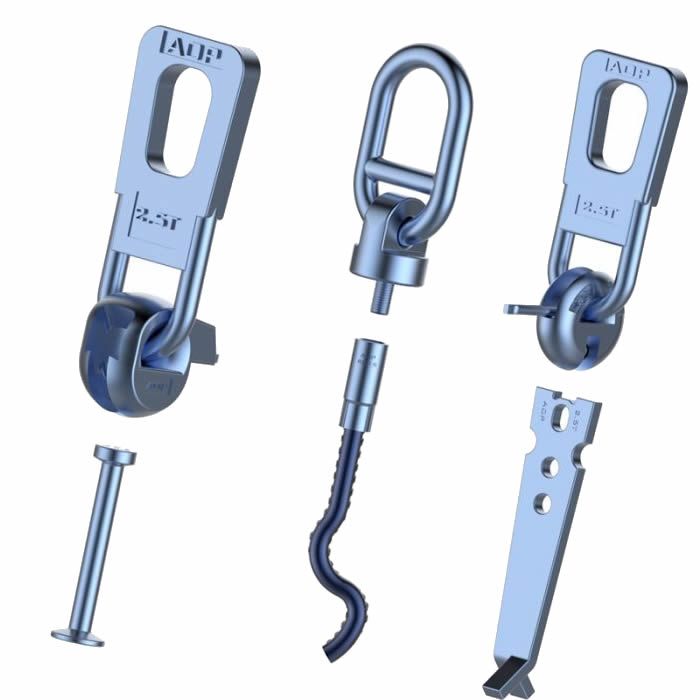
Lifting Socket

The main raw materials that cause abnormal bubbling in poured concrete include denitrifying fly ash and polycarboxylate superplasticizer (PCE).

.

A Brief Discussion on the Understanding of Concrete Appearance Quality

With the increasing demand for both engineering aesthetics and functionality in the construction industry, the appearance quality of concrete has gradually become an important evaluation indicator for construction technology.

In traditional concepts, concrete is only regarded as a load-bearing structural material, and its appearance defects are often overlooked.

However, appearance issues such as honeycomb, rough surface, color difference, and cracks not only affect the visual effect of the building, but may also reduce the compactness and durability of the structure.

Plastic Rebar Chairs

Therefore, the systematic study of the formation mechanism and control methods of concrete appearance quality has important strategic significance.

.

Application of Multi Total Water cement Ratio Concrete Mix Design Method

At present, concrete is widely used as the main load-bearing body for building structures.

To a certain extent, the performance of concrete has a significant impact on the overall quality of buildings, and the design of concrete mix proportions is a decisive factor affecting the quality of concrete.

The design method of ordinary concrete mix proportion is based on the calculation of water cement ratio, including trial mixing, adjustment, calculation, determination, re mixing, and forming.

For concrete with design requirements for durability, relevant durability tests are conducted to verify and determine the final mix proportion.

Spherical Head Anchor

Following this process for mix design often increases the design cycle.

The concept of pure water cement ratio is adopted in the ordinary mix design method, while the liquid admixture currently used has a large dosage.

Considering the water in the admixture, the concept of total water cement ratio is proposed.

.

Method and steps for mix design of self compacting concrete

The preparation of self compacting concrete generally uses Portland cement or ordinary Portland cement, which should comply with the provisions of the national standard GB175-2007 “General Portland Cement”.

Concrete Plate Anchors

For large volume self compacting concrete with temperature control requirements, slag silicate cement, medium or low heat cement should be selected.

Cement should have low water demand and good compatibility with the high-efficiency water reducing agent used.

.

Factors affecting compressive strength of concrete in construction engineering and testing methods

The particle size, shape, and strength characteristics of aggregates have a direct impact on the compressive strength of concrete.

Choosing aggregates with good physical and chemical stability is an important means to improve the strength of concrete.

Strict control over the content of various substances in both coarse and fine aggregates is essential, especially the chloride ion content.

Excessive chloride ion content, such as using sea sand, can have a strong corrosive effect on steel bars, which not only seriously threatens the durability of concrete, but also weakens its structural integrity.

Therefore, ensuring the high quality of aggregates plays a crucial role in ensuring the compressive strength of concrete.

Plastic Nail Plate

.