Concrete is the skeleton of a building.
If there is a problem with the bones, even if the decoration is beautiful, it is still a castle in the air.
.
Construction Precast Development
Precast News From China
Concrete is the skeleton of a building.
If there is a problem with the bones, even if the decoration is beautiful, it is still a castle in the air.
.
The cracks generated in concrete structures under load are called stress cracks.
Ordinary concrete components may experience stress cracks when subjected to 30% to 40% of the design load, and the ultimate failure load of such components is often more than 1.
5 times the design load value.
As long as the width of such cracks meets the specifications, it will not affect the safety of the structure.
.
After the deployment of precast buildings, the “identity management” of precast concrete components (PC components) has become an unavoidable process.
A laminated board and a precast wall panel must be connected by identification from factory to lifting, from acceptance and accountability to later operation and maintenance.
.
The use of polymer modified cement mortar for repair treatment not only provides good restraint on the surface of concrete structures, but also effectively isolates moisture and air from entering the interior of concrete components, and effectively suppresses potential expansion stresses in the future.
It has a reinforcing effect on concrete components, ensuring durability meets the original design requirements.
This article takes a project in Yuelu District, Changsha as an example to address the widespread problem of bursting and bulging on the surface of concrete structures.
Based on on-site inspection and analysis results, targeted technical measures are proposed to provide some reference for the repair and treatment of large-scale surface bulging problems in high-rise or super high-rise concrete structures.
.
Sichuan Kunshengyu New Building Materials Co.
, Ltd.
(Kunshengyu) is located in Shaqu Street, Dayi County, Chengdu City.
It focuses on the research and manufacturing of UHPC ultra-high performance concrete and GRC glass fiber reinforced concrete products.
UHPC building facade detailed components are a specialized product line of Kunshengyu for building facades – eaves lines, waistlines, window frames, balcony railings, precast canopy eaves, decorative lines, etc.
They are replicated with UHPC molds, precast in factories, and installed on site to serve residential, office, hotel, commercial and other projects, providing one-stop services from detailed design to finished product delivery.
.
Whether the strength of concrete occurs and develops regularly, whether surface defects of concrete can be controlled, and whether the durability of concrete can meet the service life are closely related to the construction technology, construction details, and curing of concrete on the construction site.
This article briefly discusses the impact and harm of non-standard construction on concrete quality at the construction site.
.
1.
The overall effect analysis of concrete structures should be carried out, and if necessary, more detailed analysis should be conducted on special parts of the structure under stress conditions.
.
According to the Notice of the Ministry of Industry and Information Technology on Issuing the Fourth Batch of Industry Standard Revision and Foreign Language Version Project Plan for 2026 (MIIT Letter [2026] No.
298), led by the Institute of Building Materials Industry Technology Information and Jinan University, the preparation of the industry standard for “Recycled Concrete Components for Artificial Reefs” (Plan No.
2026-0810T-JC) will be carried out.
.
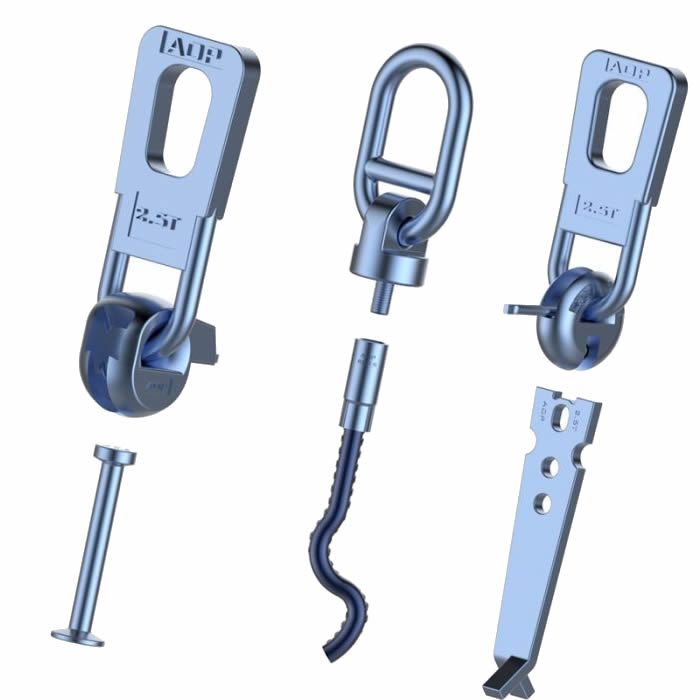
Precast buildings prepare wall panels, floor slabs, stairs, balconies, and other components in the factory and transport them to the construction site for hoisting and assembly.
Components can weigh several tons or even tens of tons, and some exterior wall panels are tall and large.
If any link of lifting, stacking, or supporting is not properly managed, it may cause injuries, crushing, or component tipping.
This article focuses on the special safety of precast components: component stacking, specialized lifting equipment, temporary support, positioning and fixing, grouting connection, and finished product protection.
The general lifting foundations such as tower crane operation and lifting command cables have been briefly described in previous issues and will not be repeated here.
.
When a component is subjected to a downward load, the entire beam will bend downward: the upper part of the beam is compressed and pressed, and the lower part is stretched and pulled.
Concrete has an extremely strong natural ability to withstand compression and crack when pulled, so it is directly placed in the compression zone to fully utilize its strengths; The concrete slab serves as both the bridge deck and floor slab, directly bearing vehicle and live loads, and also restraining the upper flange of the steel beam to prevent local buckling and instability of the thin steel plate under compression.
.