What about the 10 point tax difference when the value-added tax rate for the concrete industry changes from 3% to 13% in 2026?

Policy basis: The Notice of the Ministry of Finance and the State Administration of Taxation on the Application of Low Value Added Tax Rates and Simplified Methods for Collecting Value Added Tax on Some Goods (Caishui [2009] No.

Plastic Nail Plate

9) clearly stipulates that general taxpayers who sell self-produced commodity concrete (limited to cement concrete produced from cement as raw material) can choose to calculate and pay value-added tax at a simplified rate of 3%.

.

How to avoid concrete segregation during the pouring process of bridge pier body? What impact will segregation have on the quality of the

Concrete segregation is essentially the phenomenon of the separation of various component materials under the action of gravity and external forces.

The seemingly subtle changes of coarse aggregate sinking, slurry floating, and water secretion may trigger a chain reaction that erodes the quality of the pier body from the inside out.

Plastic Rebar Chairs

.

Researchers have developed a “giant” using concrete, achieving the goal of “killing three birds with one arrow”

On January 30th, in Macheng City, Hubei Province, a massive object resembling a ship completed its final pressure test in the factory area of Wugang Institute New Materials Company of China Communications Second Navigation Bureau.

This is a prestressed UHPC shell cast-in-place inner core ordinary concrete composite cover beam (also known as “Ningbo beam”) independently developed by the company’s technical team.

Its successful development means that multiple global challenges in bridge construction are expected to be solved.

Spherical Head Anchor

.

Application and development of foam concrete in housing construction system (I)

With the continuous deepening of China’s energy-saving and low-carbon policies and the significant improvement of people’s quality of life, the energy consumption and carbon emissions in the construction industry are increasingly receiving high attention from the whole society.

As an important carrier of energy consumption, buildings’ energy conservation and emission reduction have become one of the key links in promoting the achievement of the national “dual carbon” goals.

The heat loss caused by building envelope structures (including roofs, exterior walls, doors and windows, floors, etc.

) is the main reason for the high energy consumption of buildings.

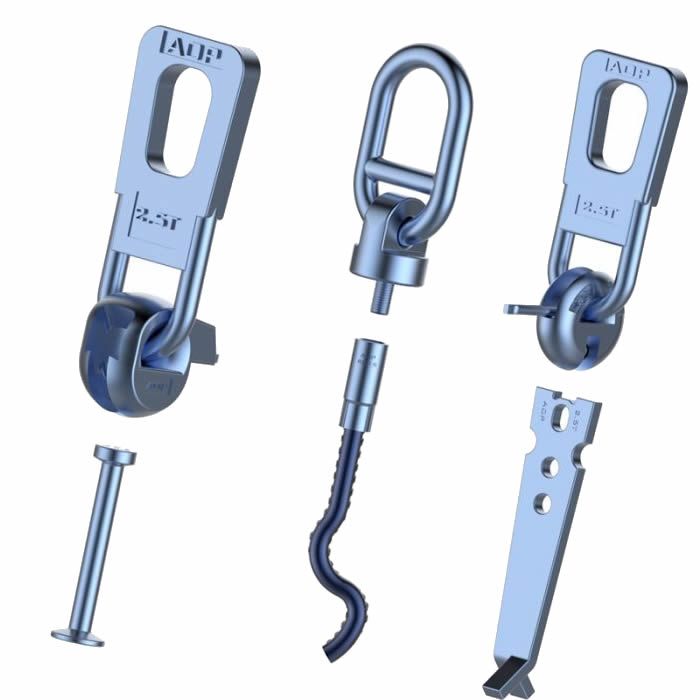
Cast in Loop

Therefore, improving the thermal performance of building envelope structures and developing efficient and energy-saving insulation systems have become one of the core topics in global building energy conservation research.

In this context, the research and application of high-performance building envelope insulation materials is regarded as an important technological path to achieve building energy efficiency goals.

.

How to proficiently master the mnemonic of concrete performance for concrete workers

Concrete, as the cornerstone of the construction industry, its performance and quality are directly related to the safety and durability of the project.

For every person engaged in concrete work, mastering the performance characteristics of concrete proficiently is the key to ensuring project quality.

Shuttering Magnet

Today, we will bring you a “Formula for Concrete Performance” to help you understand the core points of concrete more systematically and comprehensively.

.

Experimental study on the bonding behavior between GFRP steel bars and ordinary and high-strength geopolymer concrete

Cement based concrete is the most commonly used material in construction, but its production process emits a large amount of CO ₂, exacerbating global warming.

Shuttering Magnet

Geopolymer concrete (GPC) is made from industrial waste materials such as fly ash and slag, reducing carbon emissions by 80% and possessing advantages such as early strength, corrosion resistance, and low creep.

At the same time, fiber-reinforced polymer (FRP) bars (such as GFRP) have characteristics such as corrosion resistance, lightweight, and high strength, making them suitable for harsh environments.

Therefore, the combination of GFRP reinforcement and GPC is considered a sustainable and durable green building material.

.