1.
The overall effect analysis of concrete structures should be carried out, and if necessary, more detailed analysis should be conducted on special parts of the structure under stress conditions.
.
Precast News From China
1.
The overall effect analysis of concrete structures should be carried out, and if necessary, more detailed analysis should be conducted on special parts of the structure under stress conditions.
.
According to the Notice of the Ministry of Industry and Information Technology on Issuing the Fourth Batch of Industry Standard Revision and Foreign Language Version Project Plan for 2026 (MIIT Letter [2026] No.
298), led by the Institute of Building Materials Industry Technology Information and Jinan University, the preparation of the industry standard for “Recycled Concrete Components for Artificial Reefs” (Plan No.
2026-0810T-JC) will be carried out.
.
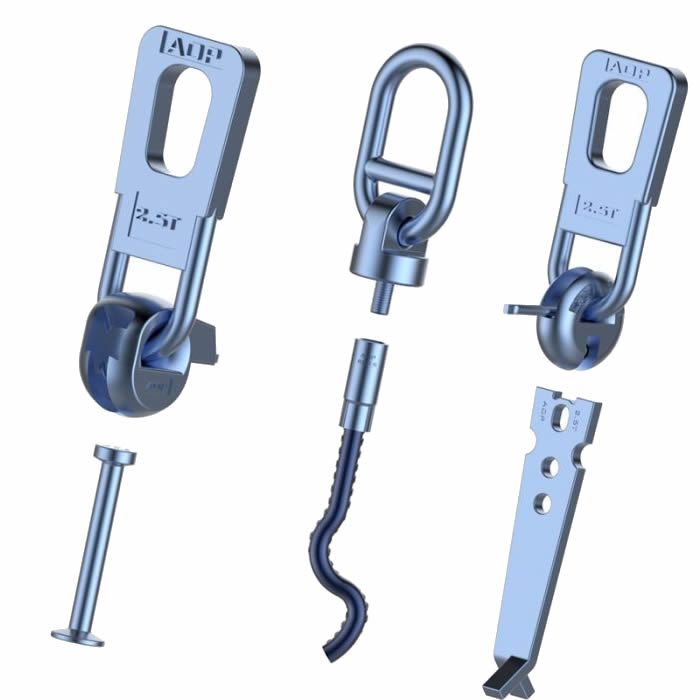
Precast buildings prepare wall panels, floor slabs, stairs, balconies, and other components in the factory and transport them to the construction site for hoisting and assembly.
Components can weigh several tons or even tens of tons, and some exterior wall panels are tall and large.
If any link of lifting, stacking, or supporting is not properly managed, it may cause injuries, crushing, or component tipping.
This article focuses on the special safety of precast components: component stacking, specialized lifting equipment, temporary support, positioning and fixing, grouting connection, and finished product protection.
The general lifting foundations such as tower crane operation and lifting command cables have been briefly described in previous issues and will not be repeated here.
.
When a component is subjected to a downward load, the entire beam will bend downward: the upper part of the beam is compressed and pressed, and the lower part is stretched and pulled.
Concrete has an extremely strong natural ability to withstand compression and crack when pulled, so it is directly placed in the compression zone to fully utilize its strengths; The concrete slab serves as both the bridge deck and floor slab, directly bearing vehicle and live loads, and also restraining the upper flange of the steel beam to prevent local buckling and instability of the thin steel plate under compression.
.
The damage assessment of concrete components is mainly divided into external damage assessment and internal damage assessment.
.
Abstract: The depth of concrete cracks is an important parameter for evaluating the safety and durability of components, and the ultrasonic single-sided flat measurement method is the most widely used non-destructive testing method on site.
If the testing personnel only follow the standard and do not understand the principle, it often leads to misjudgment when faced with actual engineering conditions such as narrow crack width, water accumulation or filling in cracks, inclined cracks, and dense steel bars in the testing area.
This article is aimed at engineering testing technicians to systematically explain the basic principles of ultrasonic single-sided flat measurement method based on relevant standards, with a focus on analyzing the mechanism of the influence of crack width on detection accuracy.
This article takes a 100 kHz planar transducer as an example to quantitatively discuss the issue of “when the crack width is so small that the ultrasonic flat measurement method is no longer applicable”, which is a common concern among testing personnel.
.
Professor Qian Xiaoqian from Zhejiang University proposed the “eight hour curing concept” based on the characteristics of modern concrete and the summary of engineering practice and theoretical research; Professor Gan Changcheng proposed the concept of “perfect wet curing” for early concrete based on extensive engineering practice; Professor Sun Zhenping from Tongji University conducted in-depth research and analysis on the complexity of modern concrete working environment and the causes of early crack formation, and summarized the “three in one prevention system for early cracking of concrete”.
These research results have great guiding significance for us to better understand concrete cracks and prevent them.
.
The combination coefficient of live load on the floor of special function rooms is taken as the default value of the software, and the calculation result tends to be unsafe.
.
After the concrete pouring or completion of the components, the construction unit should develop a corresponding construction and maintenance plan based on the structure, environmental conditions, and other factors.
.
With the rapid development of commercial concrete, there is an increasing phenomenon of both supply and demand sides arguing over the low strength of structural concrete.
As the commercial concrete industry belongs to the buyer’s market, in order to timely recover payment and continue to cooperate with the demand side, most enterprises have to make concessions and passively bear some economic responsibilities.
.