Analysis of the influence of different dosages of fly ash on the durability performance of C80 concrete

C80 grade high-strength concrete, with its excellent mechanical properties, has been widely used in service scenarios with strict requirements such as super high-rise pumping columns and large-span bridge anchorages.

However, due to inherent defects such as high self shrinkage caused by low water cement ratio, increased hydration temperature, and multiple microcracks, its durability under multiple corrosion of chloride salts, freeze-thaw cycles, and sulfates is significantly lower than that of medium and low strength grade concrete.

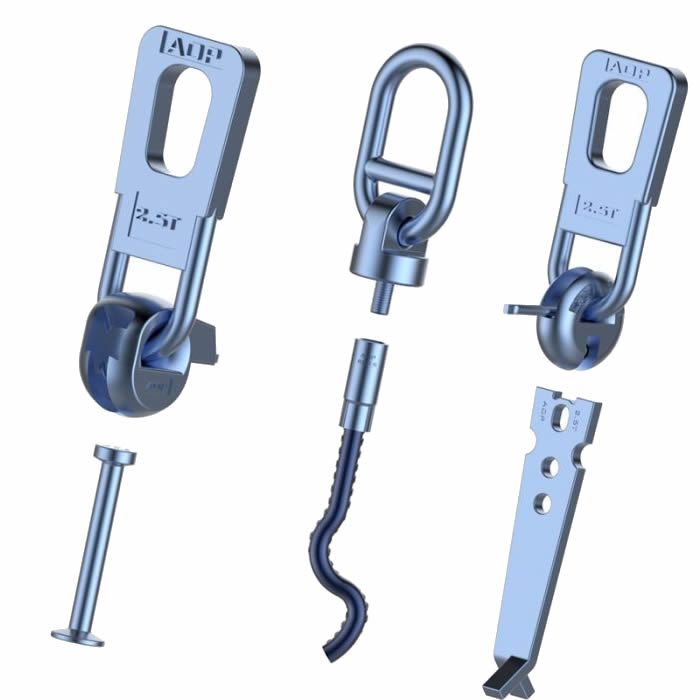
Concrete Lifting Clutch

Fly ash, as a large amount of industrial by-products, can refine the pore structure, reduce temperature rise, and improve the interfacial transition zone during the secondary hydration process.

It is regarded as an economical mineral admixture to enhance the durability of high-strength concrete.

However, current research mostly focuses on the influence of dosage within 30% on the performance of C40-C60.

There is still a lack of systematic data on the durability evolution law and damage mechanism of high-grade concrete in the range of 5% to 20% dosage.

.

How to reduce the viscosity of high-strength and ultra high strength concrete under high pumping pressure?

With the continuous expansion of civil engineering scale and the continuous improvement of technological level, some important high-rise and large-span buildings with special functional requirements continue to emerge, such as skyscrapers, super large span bridges, and giant water conservancy hub projects, which require concrete to have higher strength, better durability, and better stability.

Rebar Wheel Spacers

These demands have led to the gradual development of concrete from ordinary to high-performance and even ultra high performance.

The improvement of concrete strength is mainly achieved by reducing the water cement ratio, which also leads to a high viscosity of concrete, causing a series of construction problems such as concrete mixing, transportation, and pumping, greatly limiting the promotion and application of high-strength and ultra high strength concrete.

.

Analysis and preventive measures for false setting and bleeding of modern concrete

Bleeding is caused by the poor water retention performance of freshly mixed concrete, where a portion of the mixing water is secreted from the slurry and accumulates on the surface until the cementitious material slurry is fully solidified.

This affects the quality of the concrete; False setting is an abnormal initial solidification or premature hardening phenomenon of cement, accompanied by heat release, which produces expansion joints and reduces the durability and compactness of concrete.

The causes of false setting and bleeding can be generally divided into internal and external factors.

The internal factors mainly depend on the demand for water during cement hydration, while the external factors depend on the environmental climate and concrete vibration process.

Double Ended Ferrule

.

Introduction to Basic Knowledge of Concrete (II)

The production method of commercial concrete is different from other commodities, characterized by production based on sales and strong time constraints.

Once the concrete is produced, it is advisable to start unloading within 90 minutes and finish unloading within half of the initial setting time to ensure the quality of the concrete.

Therefore, the manufacturer and user must coordinate and ensure that the feeding speed is consistent with the material feeding speed, so that the concrete supply on the construction site is neither disconnected nor piled up.

Coil Loop Insert

.

Construction Technology Scheme for Cast in place Box Beam with Support

The upper structure of the bridge adopts a (23+2 × 26+23) m prestressed concrete inclined continuous box girder, with a one-time drop construction plan.

The end bulkhead is orthogonal to the web plate, and the middle bulkhead is inclined at a 66 ° angle to the web plate.

The continuous box girder adopts a diagonal web single box three chamber section, with parallel top and bottom plates and a beam height of 1.

6m.

The width of the single width top plate is 16.

25m, the width of the bottom plate is 11.

67m, the horizontal projection length of the diagonal web plate is 0.

29m, and the cantilever length is 2.

0m.

The thickness of the cantilever varies from 0.

18m at the outer edge to 0.

45m at the root.

The thickness of the top plate and bottom plate varies from 0.

Swift Lift Void Former

25m and 0.

22m at the mid span to 0.

45m and 0.

42m at the fulcrum, respectively, and the thickness of the web plate varies from 0.

45m at the mid span to 0.

70m at the fulcrum.

The support cast-in-situ continuous box girder body is made of C50 concrete and designed as.

.