Research on the Causes and Preventive Measures of Cracks in Large Volume Concrete

Large volume concrete refers to concrete components with a single large volume, generally referring to concrete with a single volume of more than 1 cubic meter.

Large volume concrete is widely used in important infrastructure projects such as water conservancy hubs, large foundations, and bridges.

Compared with ordinary concrete, large volume concrete has significant temperature stress and shrinkage problems due to its larger block size, which can easily cause cracks and affect the quality and service life of the project.

Widely used in dams and ship locks in water conservancy and hydropower engineering, foundation slabs and transfer layers in industrial and civil buildings, and large bridge piers and abutments in bridge engineering.

Therefore, studying the influencing factors and effective preventive measures of cracks in large volume concrete is of great significance for improving the quality of large volume concrete engineering.

Steel Rebar Chairs

.

Preventing from cracking: Analysis of the causes of early cracks in concrete and optimization of mix proportions for prevention and control

Early cracks are the primary threat to the durability of concrete structures, which originate from stress exceeding limits caused by temperature deformation and shrinkage deformation constraints.

This article deeply analyzes the formation mechanism of early temperature and stress fields in concrete, and systematically discusses the comprehensive strategy of preventing cracks from the material source through mix proportion optimization.

The focus was on exploring the mix proportion methods to reduce hydration heat and optimize shrinkage performance, and the technical principles and applications of compensating shrinkage concrete (especially MgO expansion agent) were introduced.

PVC Chamfer

The article emphasizes that “crack resistance” should be included as a key constraint condition in the multi-objective optimization design system of concrete mix proportions, to achieve the synergistic optimization of material performance, durability requirements, and economy.

.

The key differences and roles between concrete standard curing and the same conditions

Concrete standard curing test blocks and curing test blocks under the same conditions are the core of strength testing and necessary inspection items for acceptance.

Cast in Loop

Many people may be confused: what is the difference between the two? What are their respective roles? Below is a clear comparison table for easy reference and mastery!.

To control the quality of concrete well, attention must be paid to the control of each link

Concrete is a relatively special commodity with strong timeliness, which also limits its service radius.

Concrete sales are the source of quality control for concrete companies.

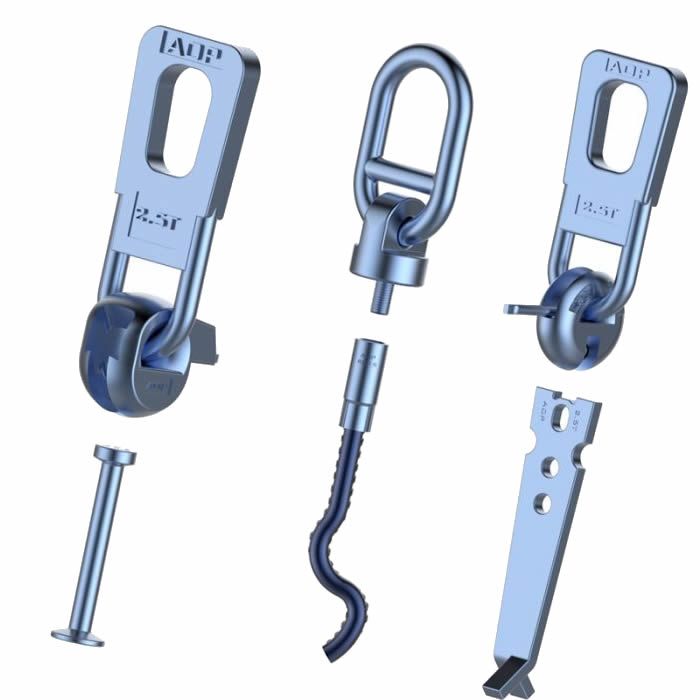
Ferrule Loop Insert

When signing a sales contract, in addition to specifying quality acceptance clauses such as unit price, quantity, payment method, engineering characteristics, and whether there are special quality requirements, it is also necessary to specify in detail the sampling method and curing system of the specimens, the operating procedures for concrete pouring, the curing method and curing period of the entity, etc.

Due to the limitation of the length of the concrete sales contract, the provisions of many quality terms are not very detailed, but it should be noted that the construction technology disclosure and maintenance plan requirements provided by the technical department of the concrete company (after being signed and confirmed by the construction technicians) have the same legal effect as this contract.

In addition, when encountering special requirements or special engineering parts, timely communication should be made with the technical department to fully assess quality risks.

.

Under the wave of multifunctionality, the chaos and standardization of concrete admixtures

Undoubtedly, admixtures have become a core component of concrete, and the iterative upgrading of their technology is a key driving force for the overall development of concrete technology.

In recent years, the additive industry has developed rapidly, and the product system has already broken through the traditional category boundaries, presenting a pattern of rich varieties and significant performance differentiation.

Rebar Wheel Spacers

Although the “Terminology for Admixtures” GB/T 8015-2017 has expanded the categories and definitions of admixtures, it is still difficult to keep up with the pace of market development and technological innovation.

Special admixtures such as reducing agents, enhancing agents, mortar, precast concrete, permeable concrete, and plant-based concrete are emerging one after another, accompanied by confusion in category naming and market chaos.

.