[Personal Opinion] Regarding the issue of compensating for the shrinkage range of concrete using the expansion strengthening strip method

In order to eliminate problems such as shrinkage and cracking of concrete during the solidification process, ultra long structures are generally equipped with expansion and contraction pouring strips.

However, seamless construction is adopted during the construction process for the convenience of construction or to meet the requirements of the project schedule.

Spread Anchor

The method of using expansion reinforcement tape is the most commonly adopted method for seamless construction.

.

Technical leader must know the plan, formwork for the construction plan of plain concrete

The difficulty in the construction of this project is the wind tunnel body engineering.

In order to achieve the finishing effect of plain concrete on the surface of the tunnel body, the bottom plate, side walls, and top plate of the wind tunnel need to be constructed by cast-in-place plain concrete.

The quality control level of fair faced concrete should not be lower than the requirements of “decorative fair faced concrete” in the “Technical Specification for Application of Fair faced Concrete” (JGJ169-2009).

Appearance quality requirements for plain concrete: no exposed reinforcement, honeycomb, voids, slag inclusion, or looseness are allowed; Uniform and smooth color; No rough surface, peeling or sanding, contamination, bubble diameter not exceeding 1mm; no repair marks, no flow or erosion marks.

Halfen Channel

.

Research on the technical path of optimizing the proportion of admixtures in early crack control of concrete

As a commonly used material in construction engineering, concrete is one of them.

Early crack problems always pose challenges to construction quality and structural safety.

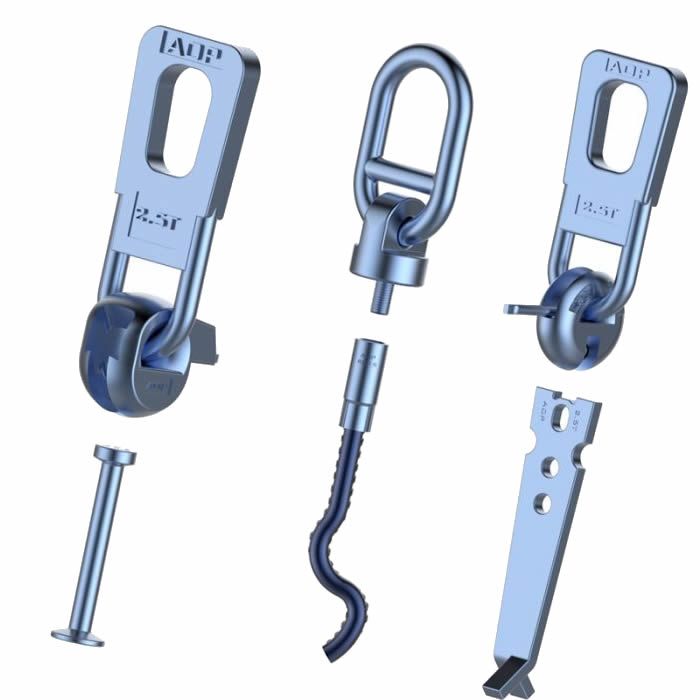
Precast Lifting Clutch

The formation of cracks is often closely related to factors such as hydration heat and shrinkage.

The introduction of admixtures has opened up an effective technical path for concrete crack control.

By reasonably screening and optimizing the types and ratios of admixtures, the crack resistance and durability of concrete can be significantly improved.

This article will study the role of admixtures in early crack control and their optimization schemes, analyze the effects of different types of admixtures on concrete performance, and then propose corresponding technical means.

.

The Influence of Concrete Raw Materials on Concrete Quality

The quality of concrete construction will lead to quality defects or cracks in concrete engineering.

Analysis suggests that this is because the deformation of concrete raw materials (including cement stone and coarse and fine aggregates) is constrained, resulting in internal stresses greater than the tensile strength of the materials.

The quality of freshly mixed concrete mainly includes its setting time and workability.

Precast Round Ferrule

When analyzing the impact of concrete raw materials on concrete quality, several aspects can be explored, including aggregates, cementitious materials, additives, and mixing water.

.

Common problems in the factory inspection and application of concrete antifreeze agents

The composite antifreeze pumping agent currently used by concrete companies is generally composed of antifreeze, early strength, water reducing, and air entraining components.

Among them: (1) Antifreeze mainly lowers the freezing point of liquid phase in concrete; (2) The dosage of early strength agent increases the early strength of concrete, enabling it to reach or exceed the critical frost resistance strength of concrete as soon as possible.

Embedment Plate

(3) Water reducing agents can reduce the water consumption of concrete and minimize concrete frost damage.

(4) Air entraining agents can alleviate the stress damage caused by ice frost heave and improve the early frost damage resistance of concrete.

.

How does the curing temperature affect the interlayer bonding strength of 3D printed concrete?

With the increasing aging population and the pressure of global climate change, it is inevitable for the construction industry to develop towards automation and energy conservation.

3D concrete printing technology can automatically and accurately lay materials to the required locations, saving labor and materials, and is a new way for the industry to upgrade.

Elephant Foot Ferrule

But it has a key issue – the bonding strength between the printing layers is not sufficient, which can result in inconsistent strength and durability of the concrete, and also shorten the service life of the building, which has always constrained the practical application of this technology.

.